
NAR Level 1 High-Power Rocket
Personal Project · Spring 2026, certified June 2026
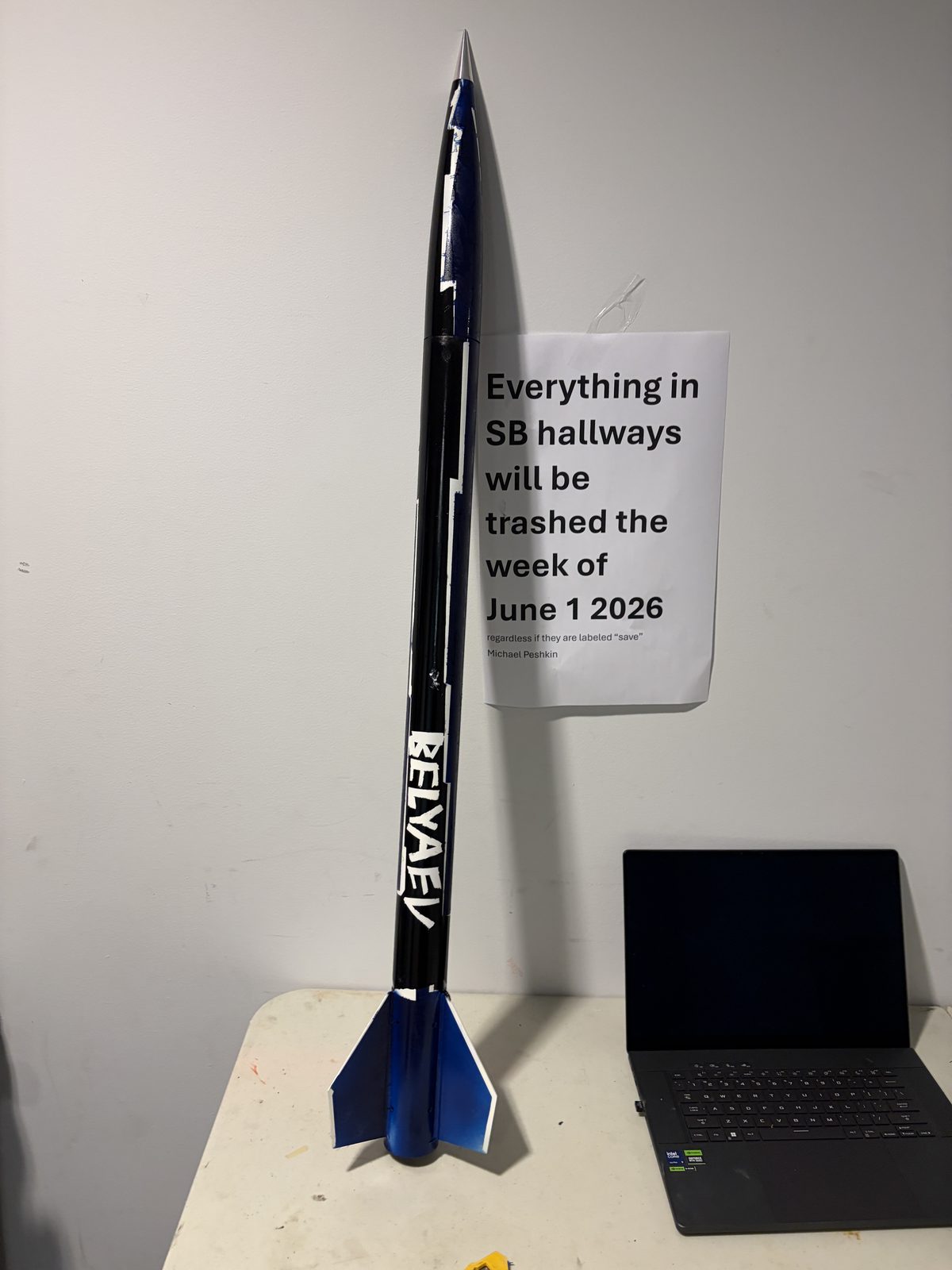
The finished airframe, and the certification flight leaving the rail on the H182R.
Overview
I earned my NAR Level 1 high-power certification by building a 3-inch fiberglass rocket from a Wildman kit and flying it to a successful, recovered flight on an AeroTech H182R. The kit flew in stock configuration, so the flight tested my workmanship and flight planning, not a design of mine. Over this project I:
- Built the motor mount, fin can, and recovery anchor
- Injected carbon-filled epoxy fin fillets through holes drilled at each fin root
- Simulated the flight in OpenRocket
- Drilled the motor’s ejection delay down to the simulated coast time
- Flew the certification flight at Bong Recreation Area, WI
Goals & Requirements
- Meet the NAR Level 1 requirement: build a high-power rocket and fly it to a successful, recovered flight
- Stock kit configuration — the goal was disciplined execution, not modification
- Recovery load path anchored into airframe structure, not a surface bond
- Fins jig-aligned during bonding with filleted internal root joints
- Deployment timed as close to apogee as the motor delay allows
Build
The motor mount tube is epoxied into G10 fiberglass centering rings, with the Kevlar shock cord anchored beneath the forward ring under an internal fillet so recovery loads run into the airframe structure rather than a surface bond. The fins were jig-aligned while the epoxy cured, and the root fillets are carbon-fiber-filled epoxy injected by syringe through holes drilled at each fin root — a fillet geometry hand tooling cannot reach on an internal joint. Recovery is single-deploy on motor ejection, the simplest scheme that satisfies the certification.
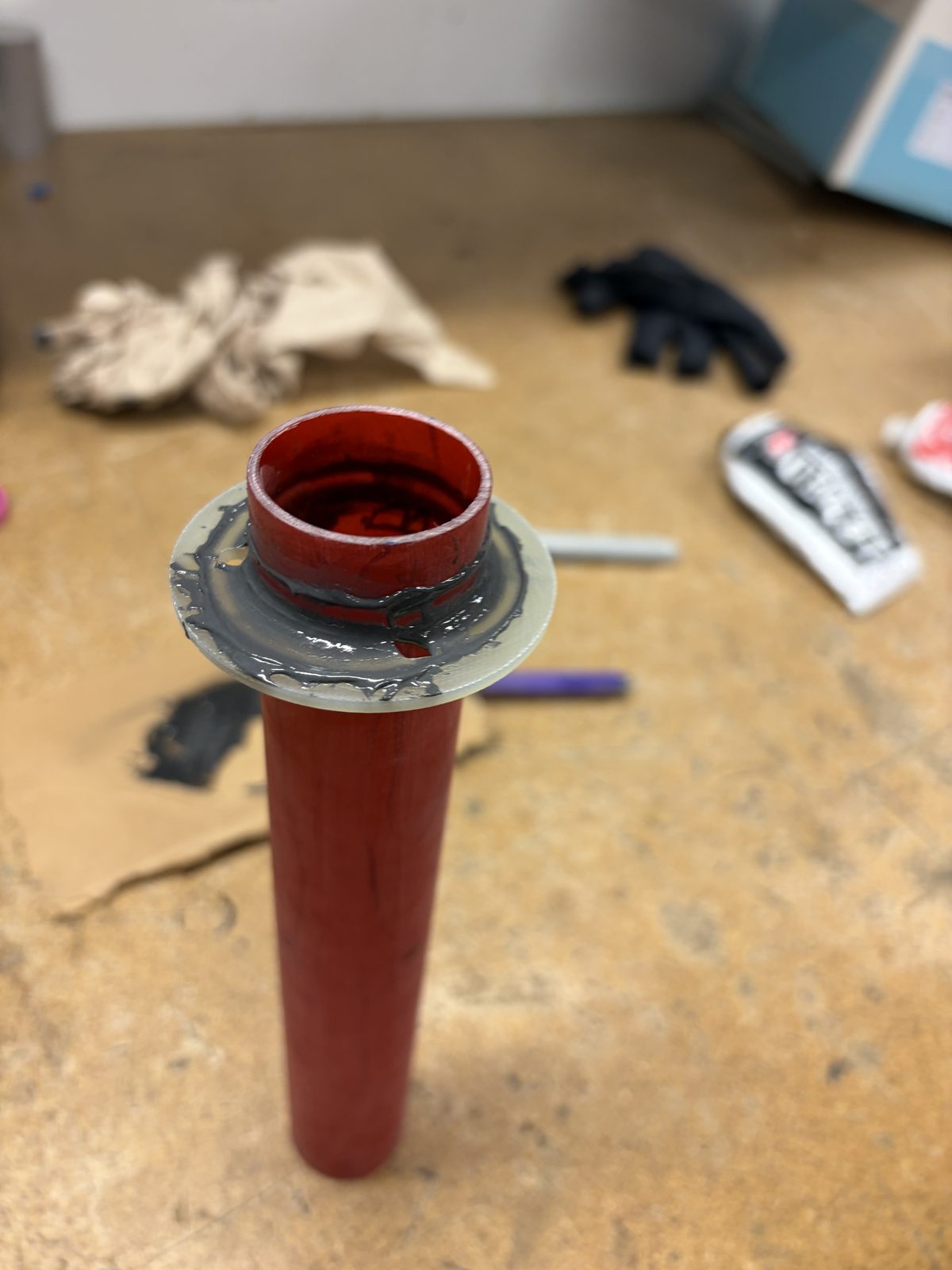
Motor mount tube with centering ring
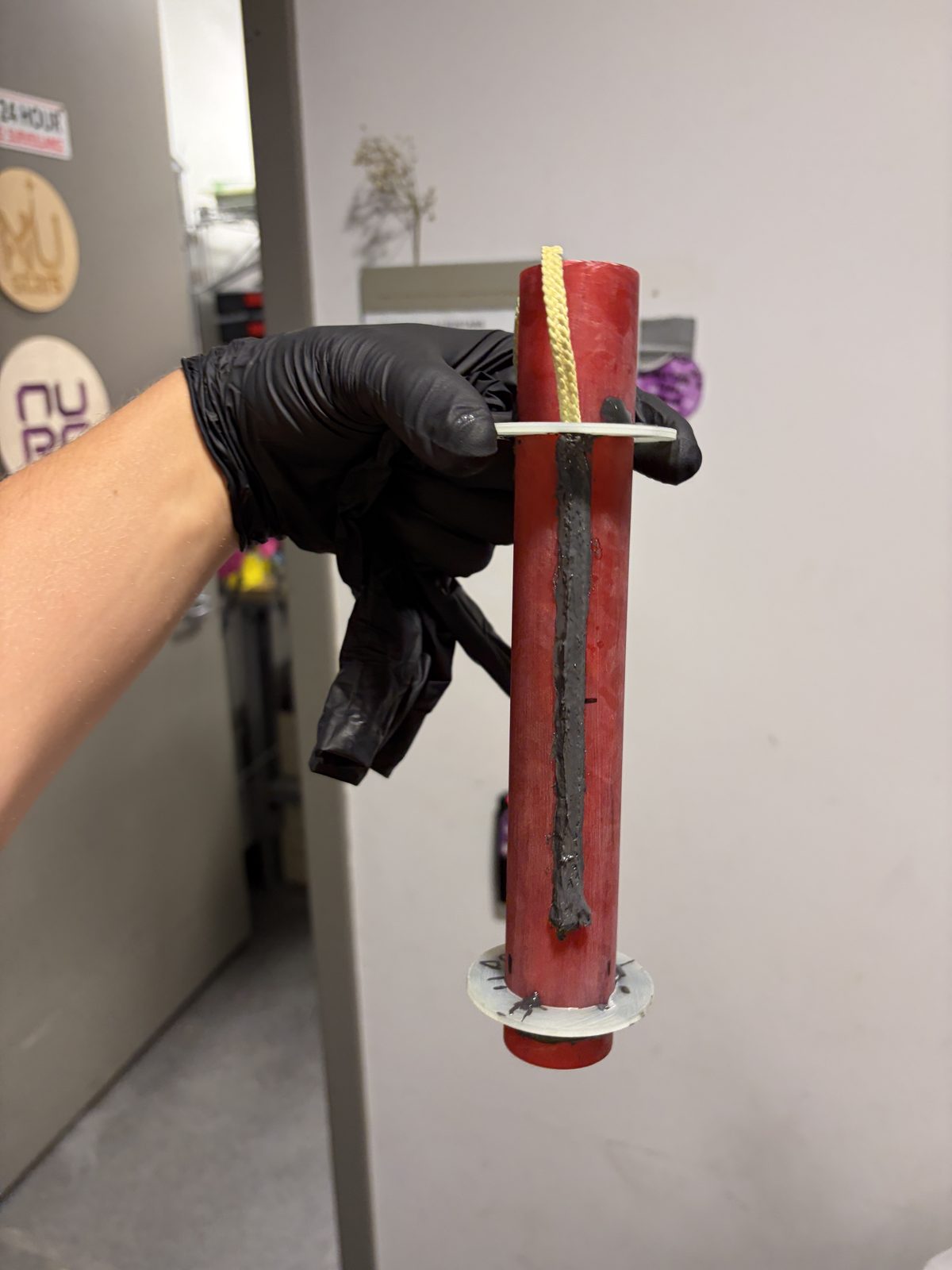
Shock cord anchored under the forward ring
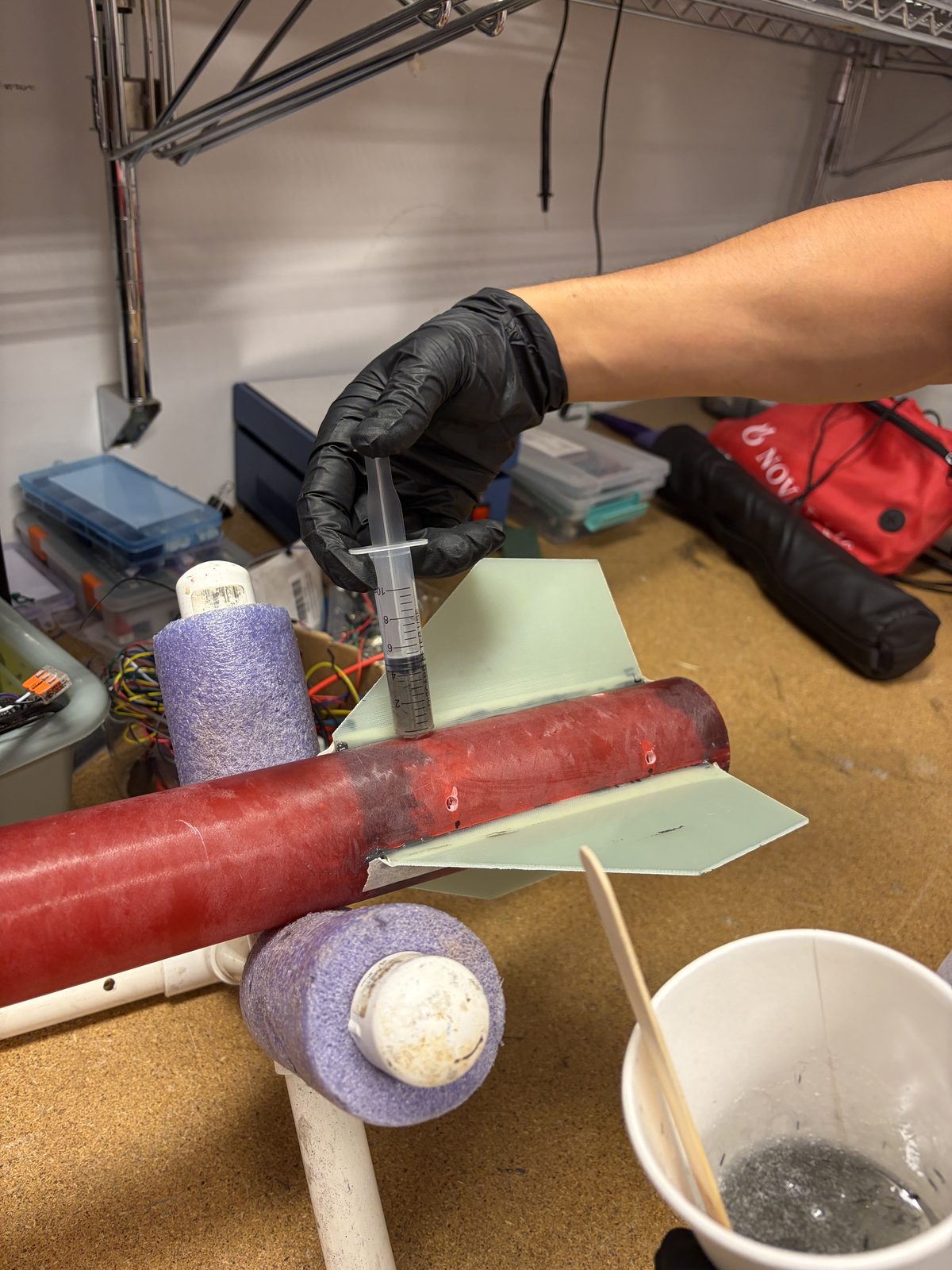
Injecting carbon-filled epoxy at the fin root
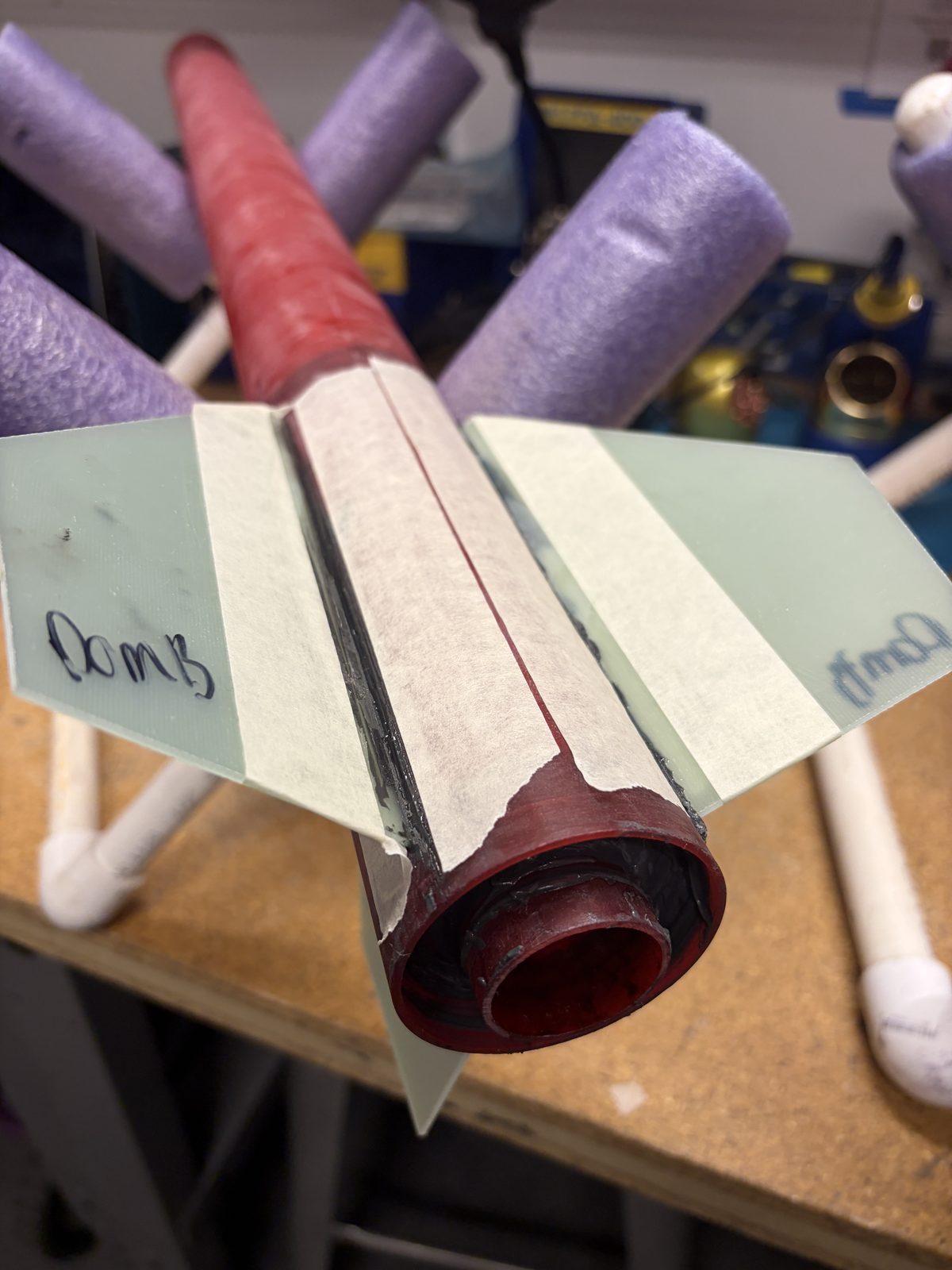
Finished fin can and motor retainer
Simulation & flight
OpenRocket predicted a 2,461 ft (750 m) apogee at 11.7 s, a 158 m/s (Mach 0.46) peak, about 14.7 g of max acceleration, and a 16 m/s launch rod exit velocity. The one number I could still design on a stock kit was the ejection delay: the simulated burnout-to-apogee coast was 10.45 s, so I drilled the motor’s delay down to match rather than flying the delay it shipped with — in the sim, deployment comes 0.05 s after apogee at ~2 m/s, minimizing shock load on the chute and airframe.
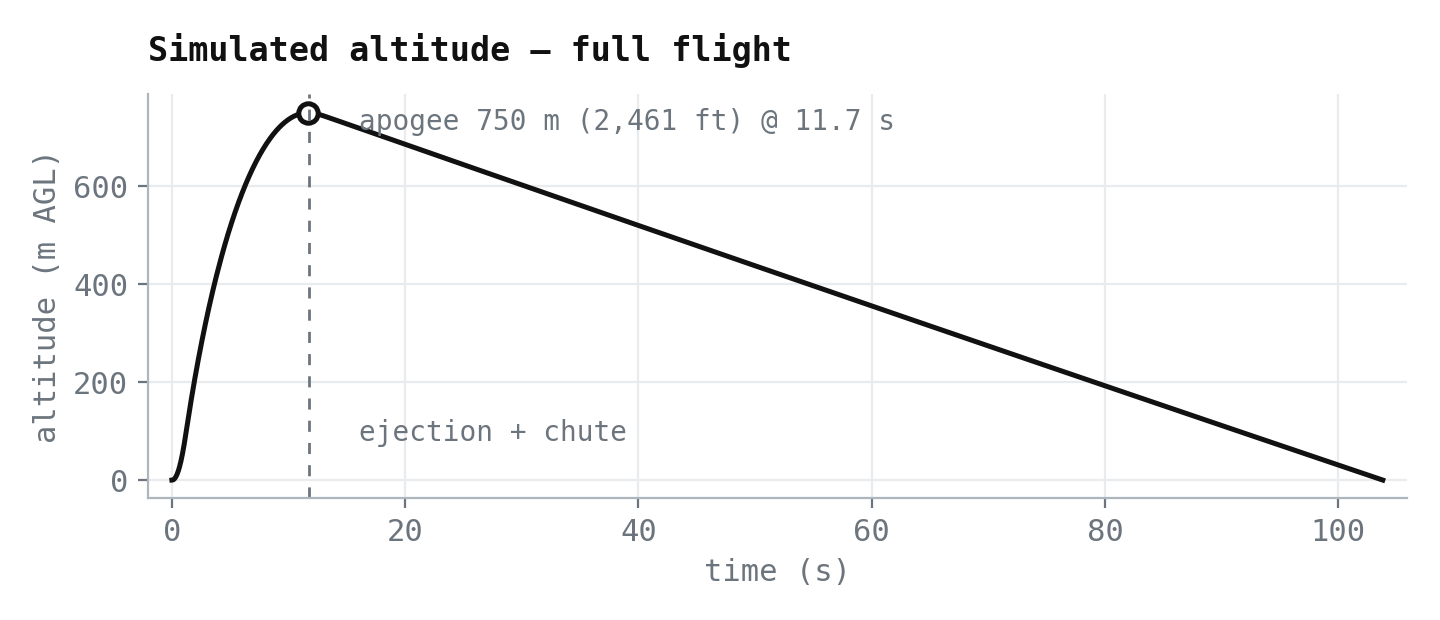
Simulated altitude — apogee 750 m at 11.7 s
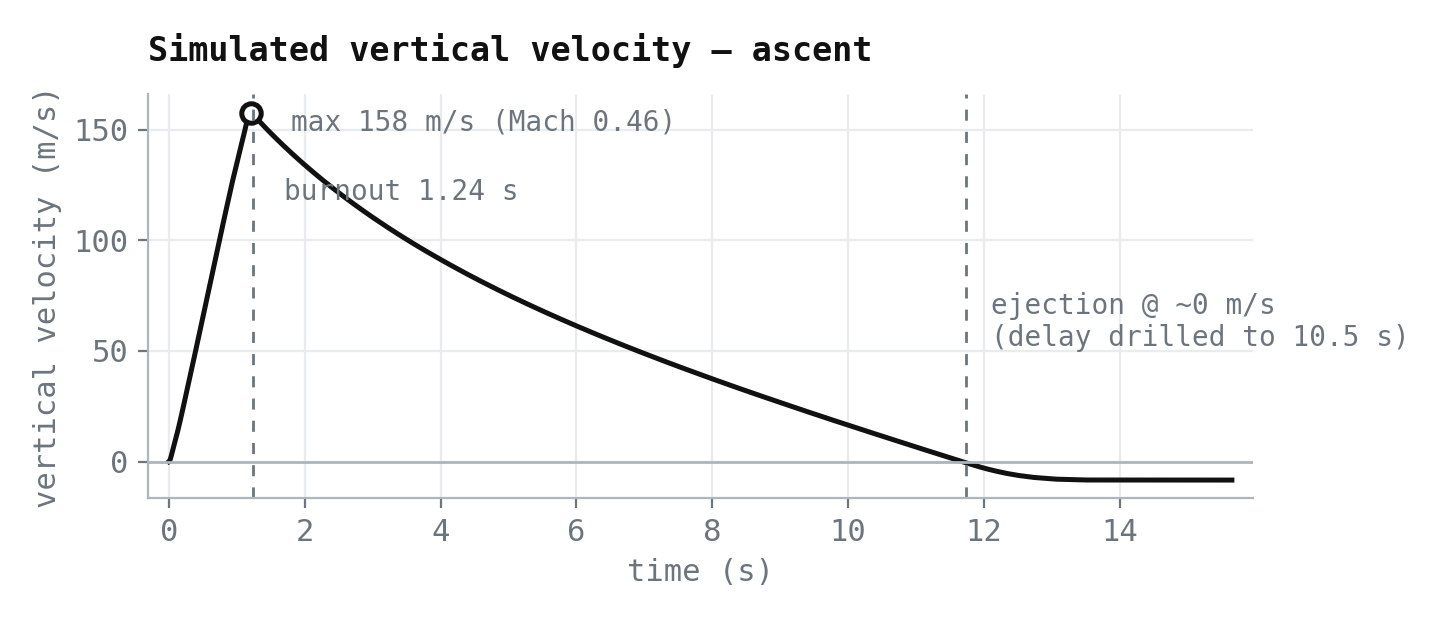
Simulated vertical velocity, burnout and ejection marked
The certification flight at Bong Recreation Area, WI flew a stable ascent with ejection at apogee and a clean recovery, and the certification was signed off in June 2026.
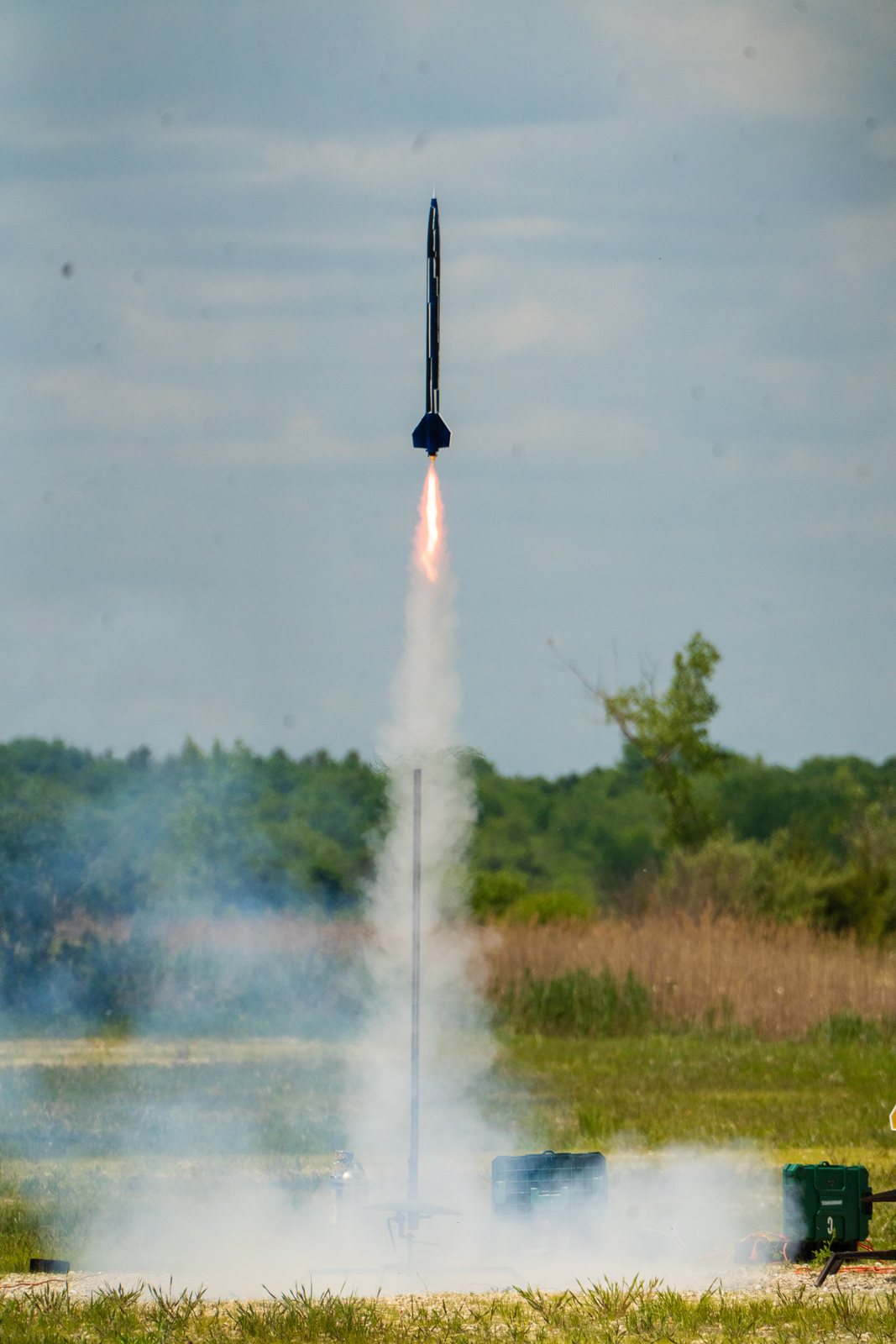
Ascent under H182R thrust
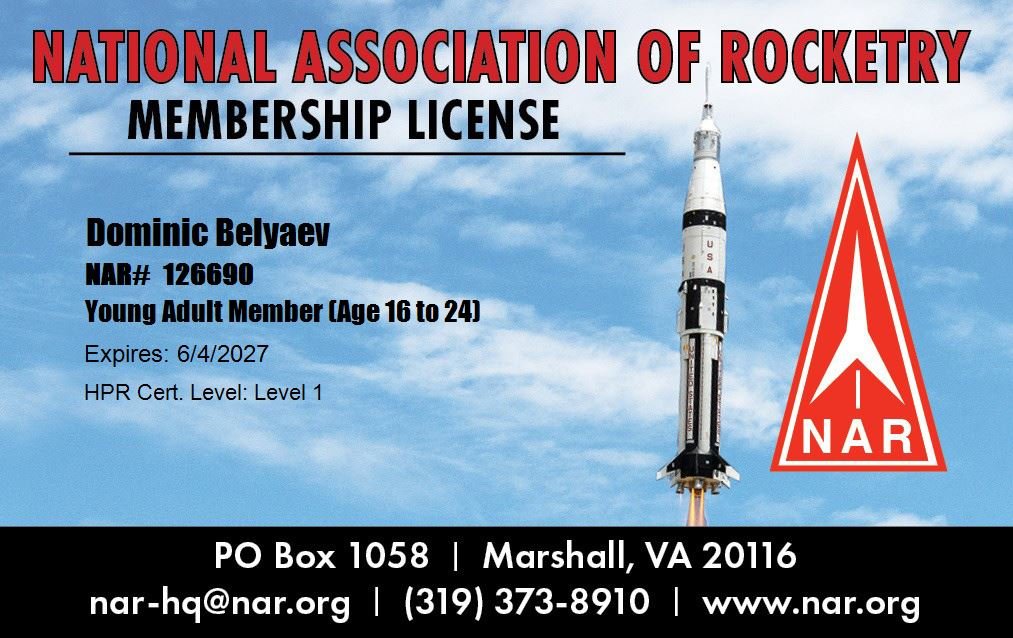
NAR #126690 · HPR Cert. Level 1
Outcomes
- NAR Level 1 high-power certification signed off June 2026 · NAR #126690
- Stable ascent, ejection at apogee, clean recovery on the H182R
- Ejection delay drilled to the simulated 10.45 s coast — predicted deployment 0.05 s after apogee at ~2 m/s
Scope note: the cert flight carried no altimeter (single-deploy, motor ejection), so every flight figure here is a prediction, not a measurement.
The follow-on became its own vehicle — a smaller 2.3-inch airframe carrying a molded carbon nosecone and a custom flight computer, flown twice on 15 Aug 2026 to close the predicted-vs-actual loop: Two Flights, One Afternoon.