
Two Flights, One Afternoon
Personal Project · Flown 15 Aug 2026
Left: flight 1 — the chute never opened. Right: flight 2, an hour later — clean deploy and recovery.
Overview
I flew the same 2.3-inch rocket twice in one afternoon at a club launch, carrying the carbon nosecone and flight computer I built, to come home with measurements instead of estimates. Over the campaign I:
- Integrated the nose section — carbon shell, printed coupler, and instrument housing, about 250 g
- Flew both flights on the AeroTech F67W-4 from a club pad and rail
- Diagnosed the flight 1 deployment failure from the logged data
- Recovered the flight 1 log from a reformatted flash volume
- Repacked the chute and reflew within the hour
- Reconstructed both trajectories in 3D from the raw logs
Goals & Requirements
- Fly the complete stack — airframe, molded nosecone, custom avionics — end to end
- Measure boost acceleration, top speed, and apogee onboard rather than simulate them
- Hold 100 Hz IMU / 50 Hz barometer logging through every flight phase
- Recover the vehicle and the data from both flights
- Fly twice in one session to test flight-to-flight repeatability
Flight day
The nose section is what contained most of the important stuff. The carbon shell seats over the printed coupler, and the flight computer rides in its printed housing on the eye-bolt recovery load path. Flight card, RSO inspection, then the rail.
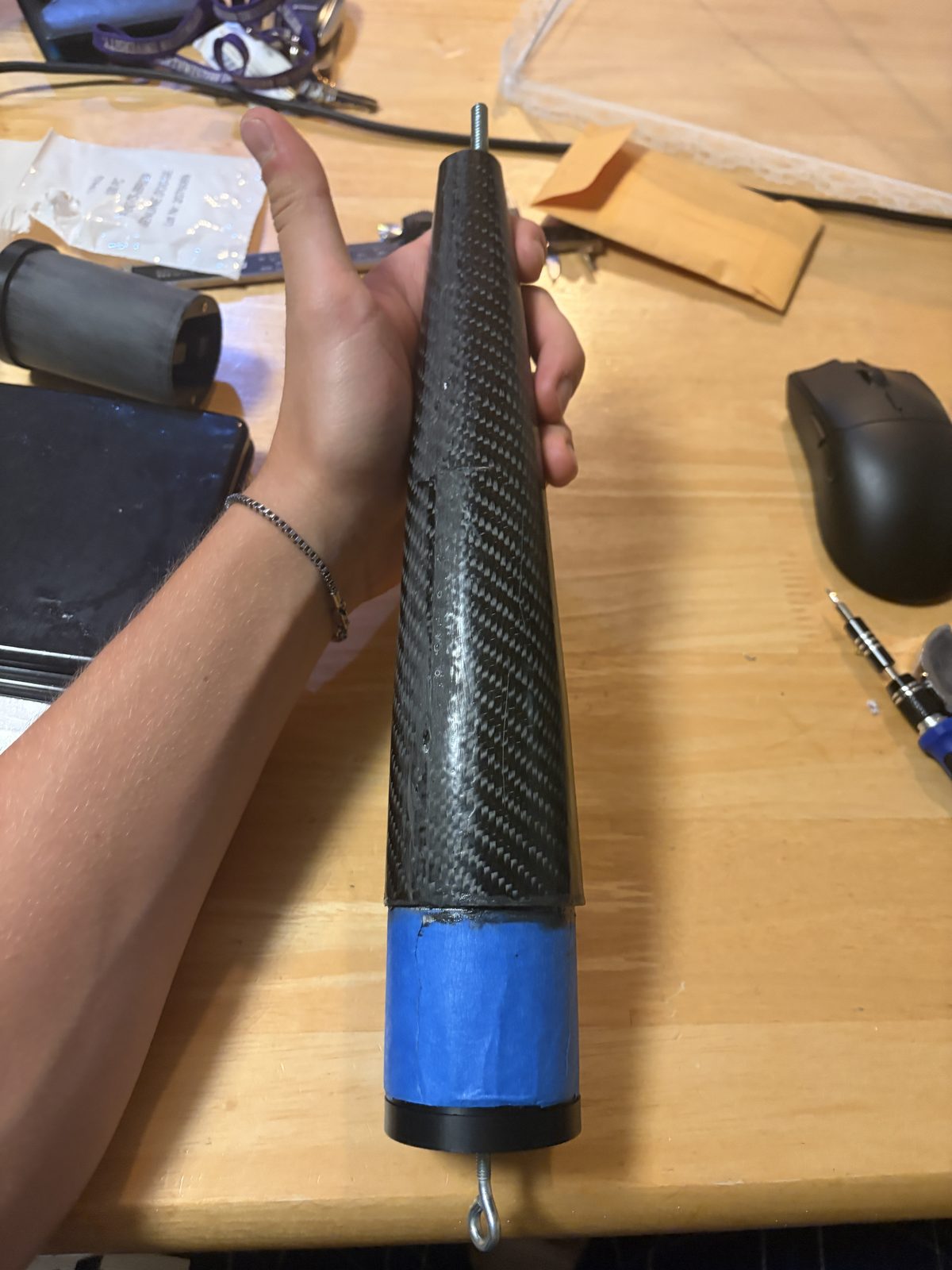
Carbon shell over the printed coupler
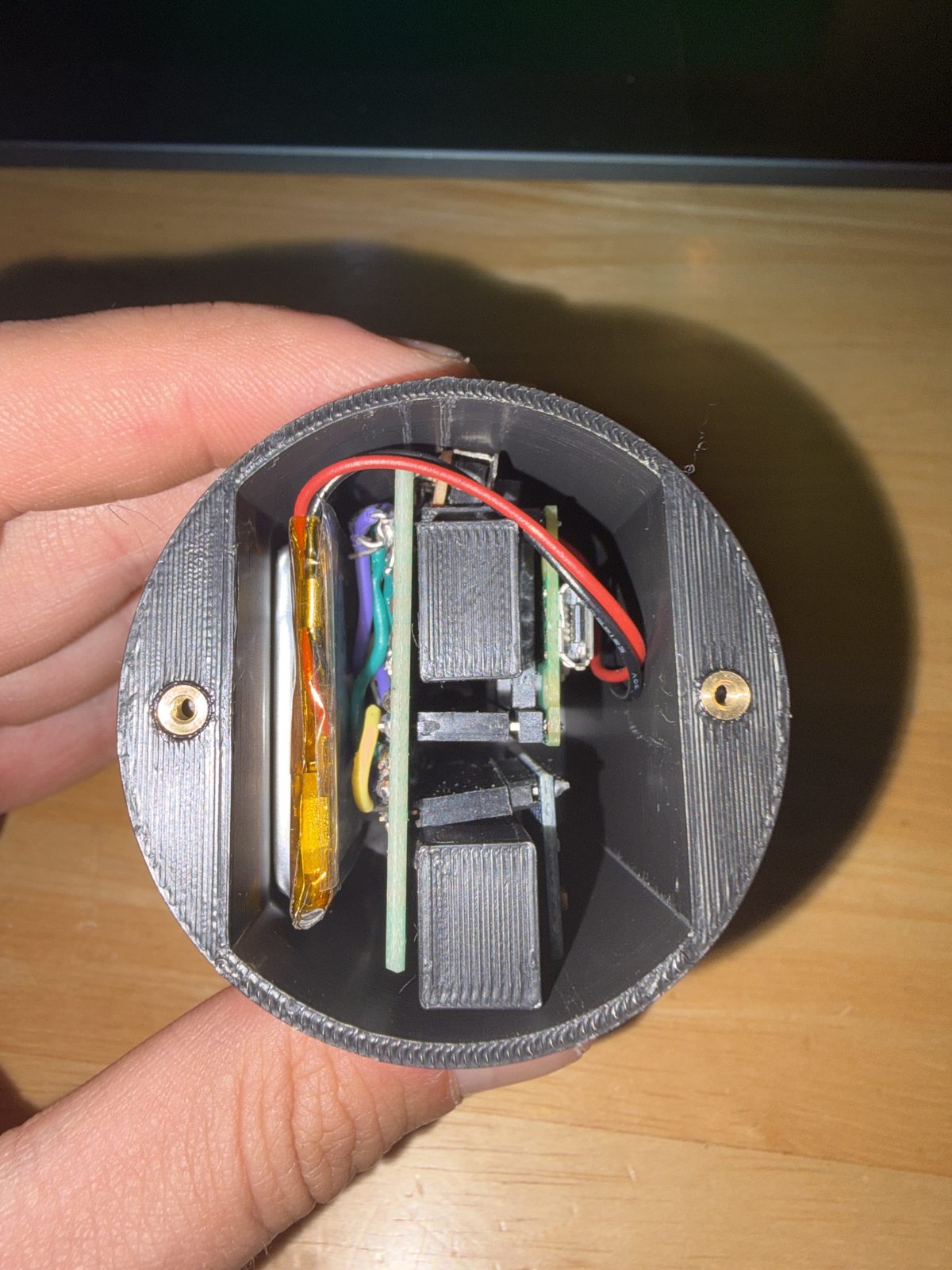
Housing into the airframe
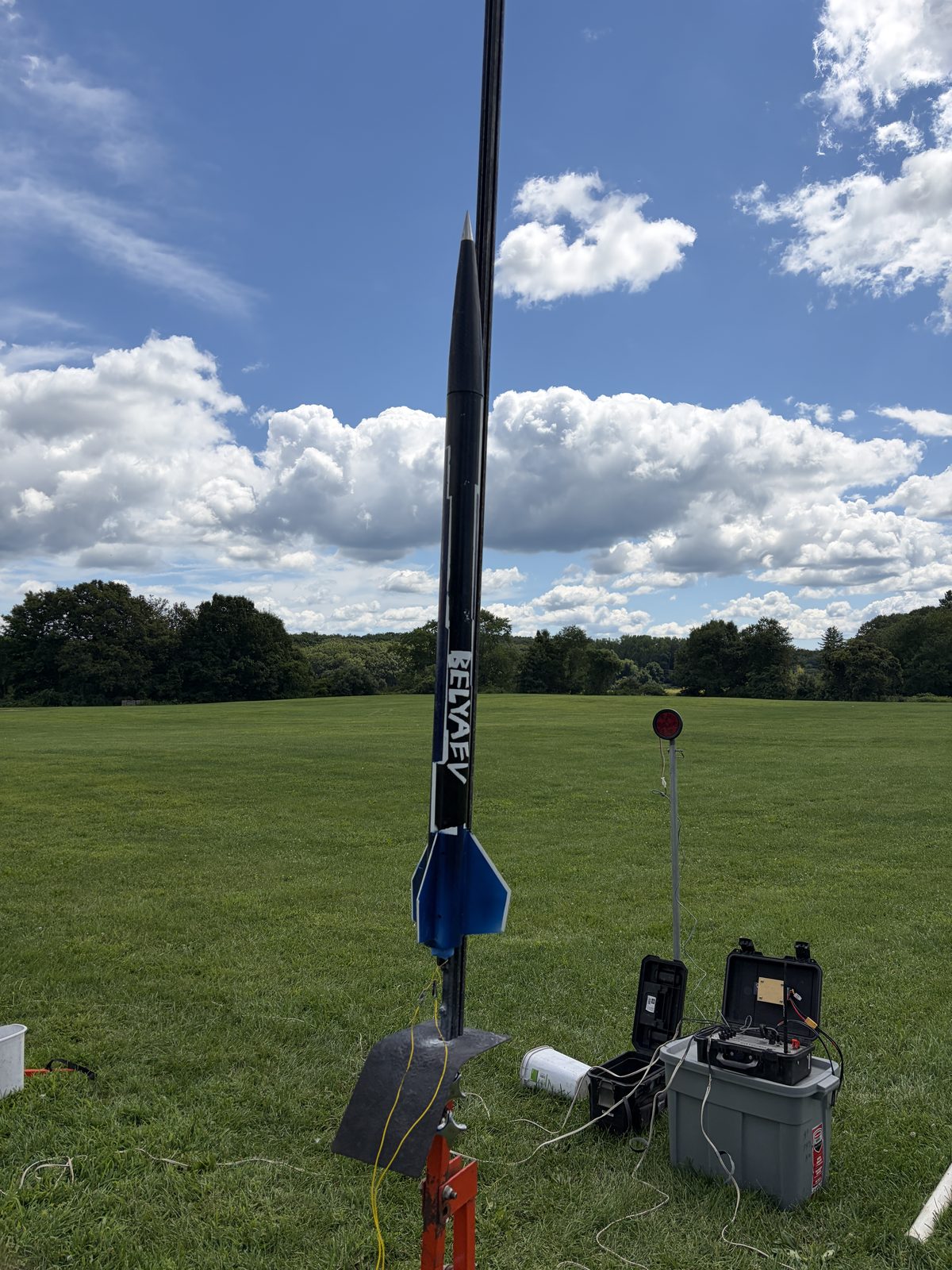
Vertical on the rail
Flight 1’s ejection charge fired on time about 4.0 s after burnout, 0.1 s after barometric apogee, with a +31 hPa pressure spike in the bay to prove it — but the chute never left the tube and the rocket came down tumbling. The failure was mechanical, not timing, and the airframe survived reflyable.
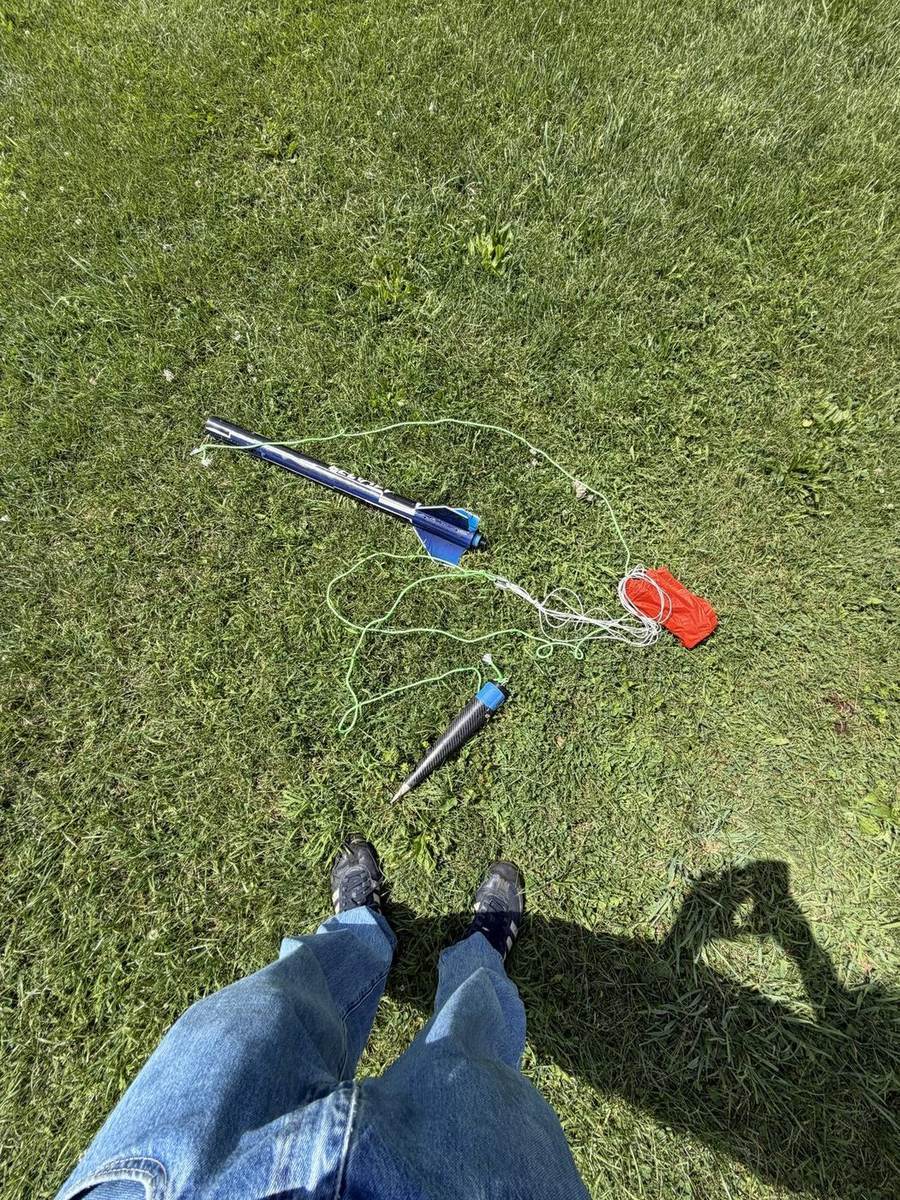
Flight 1 as found — chute still in its packed wad
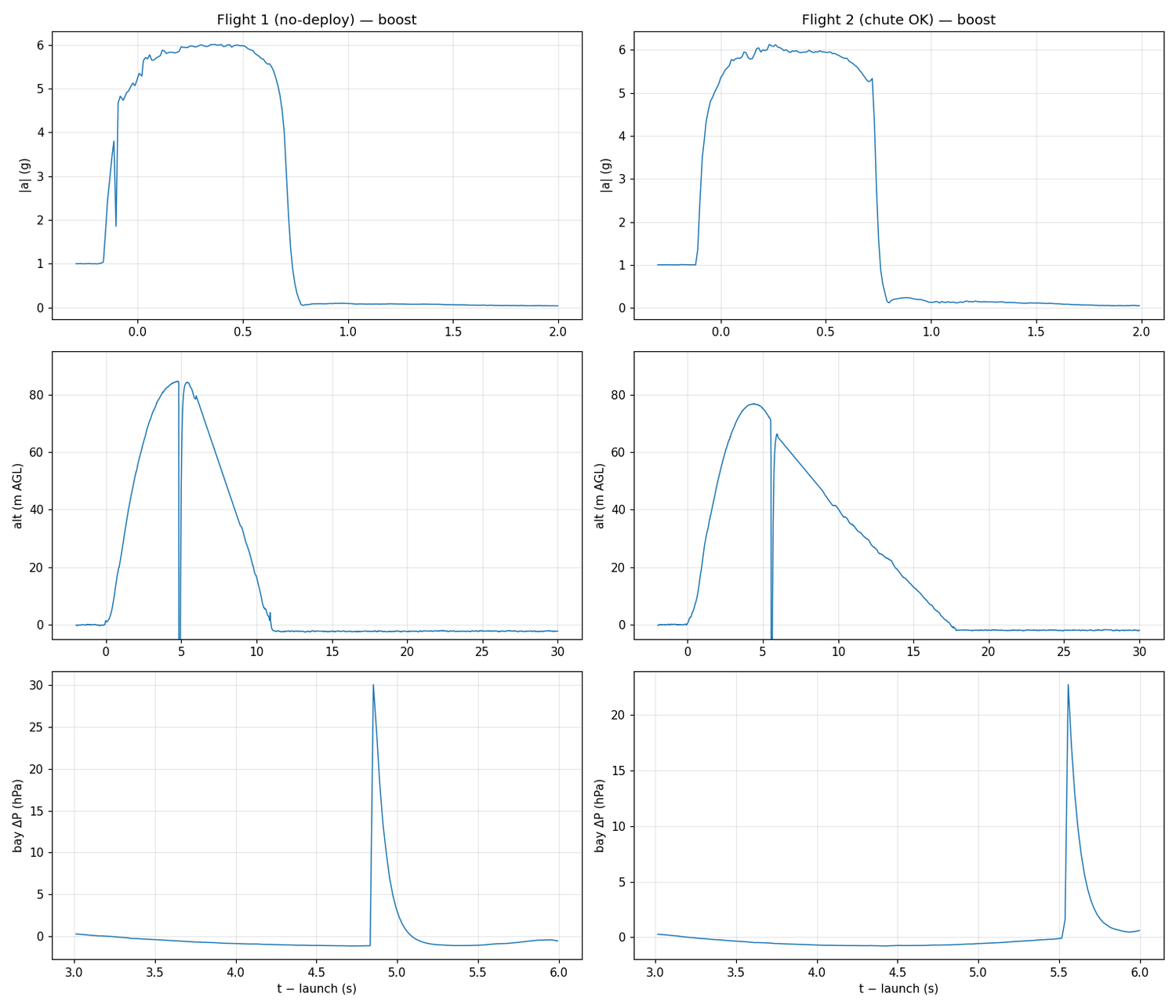
Both flights raw — boost, altitude, bay pressure
Flight 2 flew the same rocket and motor about an hour later after a repack: clean deploy and a 5.1 m/s descent under canopy. The opening shock logged 15.5 g, captured unclipped, the load at a ~10 m/s deploy, since the charge fired 1.1 s past apogee.
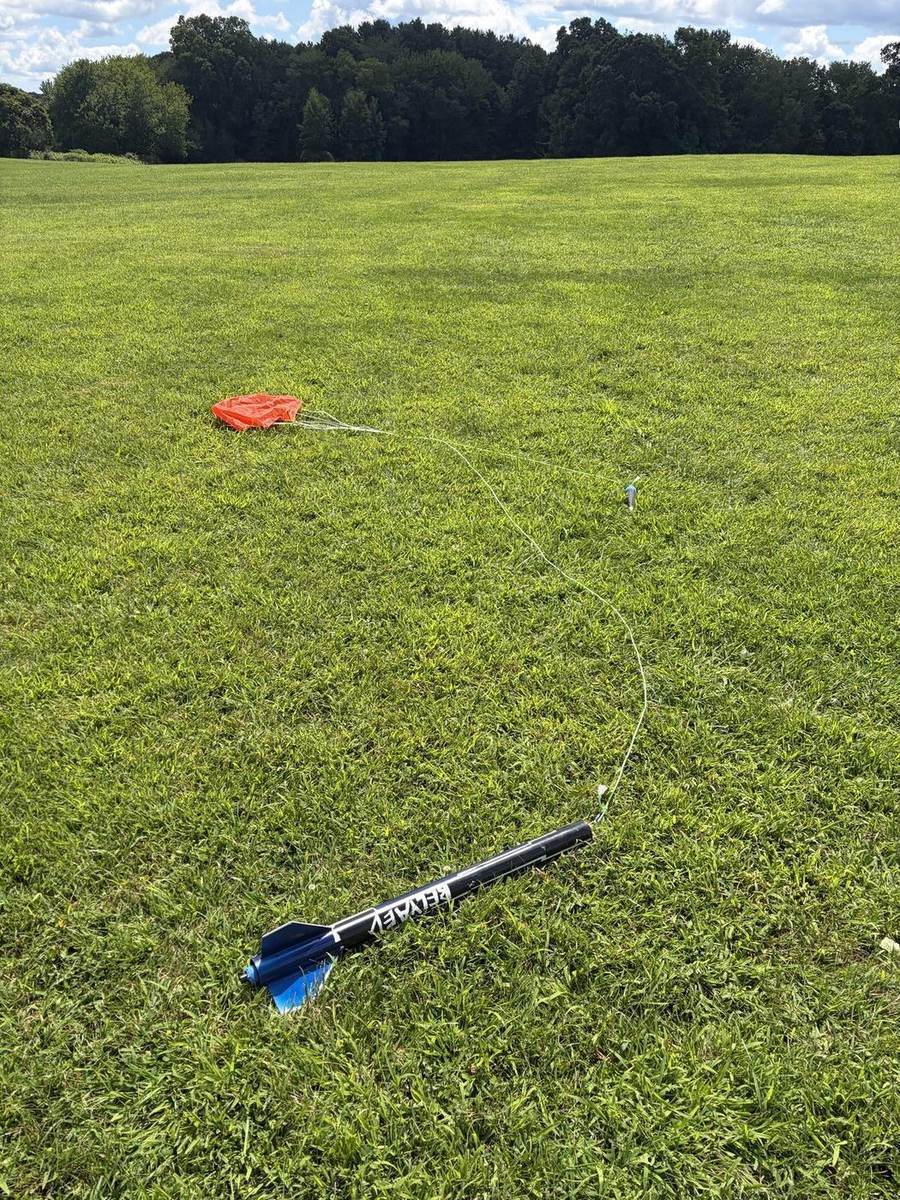
Flight 2 as found — canopy out, airframe intact
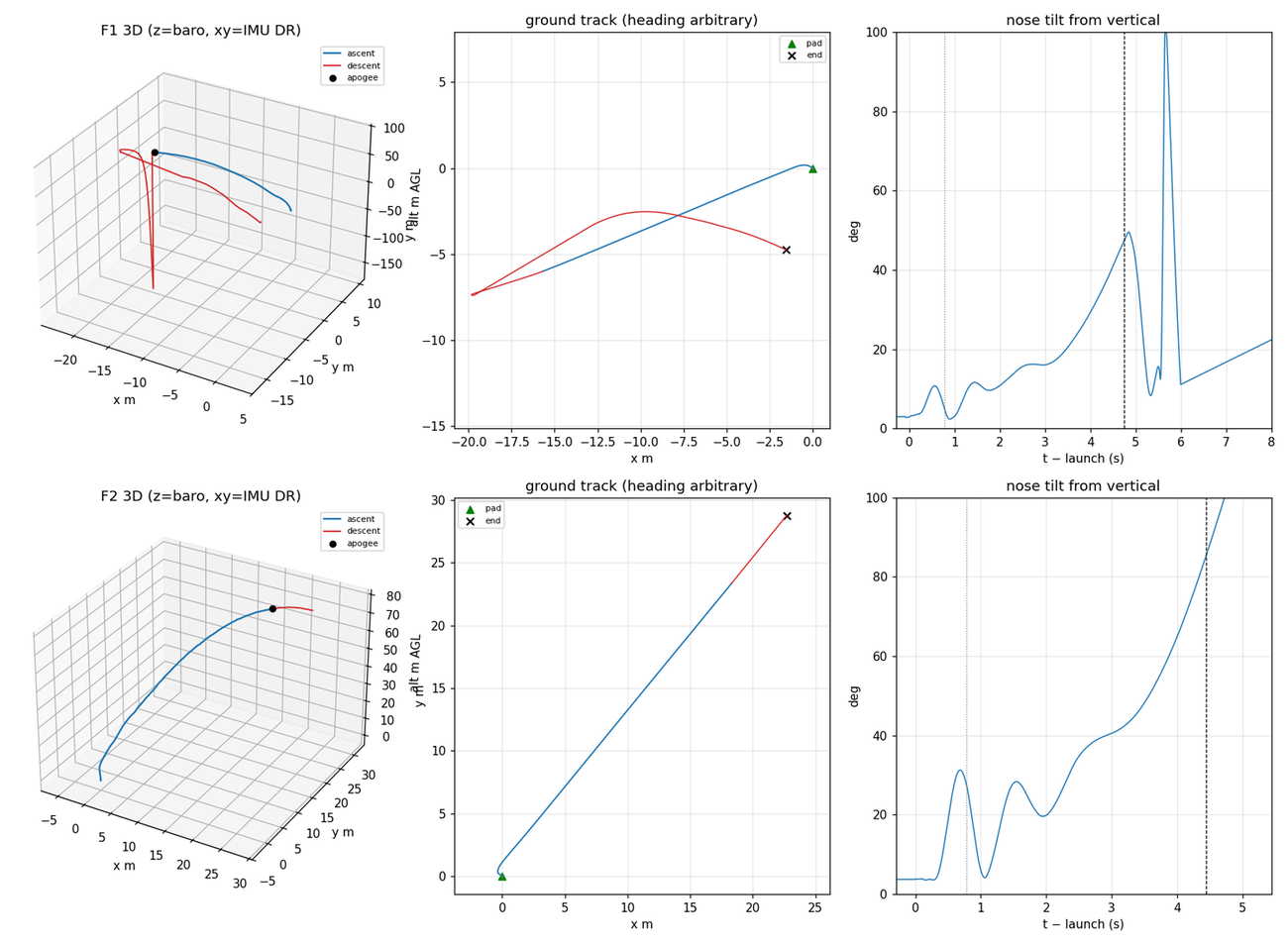
Reconstructed paths, ground tracks, nose tilt
Reconstruction - Interactive Flight Maps Rebuilt Below!! Try Dragging
I rebuilt both flights from the raw logs: gyro bias re-estimated from 60 s of still pad data, attitude integrated at 100 Hz, body acceleration rotated to the world frame and double-integrated. The barometer was held out as an independent check — IMU-only altitude agreed with it to +1.3 m (flight 1) and +3.3 m (flight 2) at apogee. Flight 2’s nose was 27.6° off vertical at burnout versus flight 1’s 4.6° — weathercocking into wind, arcing ~30 m downrange on the same energy.
The solutions are quoted from launch to ejection/deploy only, and with no magnetometer aboard, headings are relative, not compass bearings.
Interactive replay of both reconstructed flights — drag to orbit, scroll to zoom, PLAY runs both on a shared clock. Open full-screen →
Outcomes
- Boost 6.0 / 6.1 g and max velocity 37.9 / 38.5 m/s — repeatable to about 2% flight-to-flight
- Barometric apogees 84.6 / 76.9 m — the gap is weathercocking, not performance
- Descent 17.2 m/s ballistic vs 5.1 ± 0.3 m/s under canopy — direct proof the repack fixed deployment
- 47,000 IMU + 24,000 barometer records recovered from the reformatted flash; pressure cross-check +0.27 hPa