
The Tele
Design Thinking & Communication — Northwestern · Fall 2024
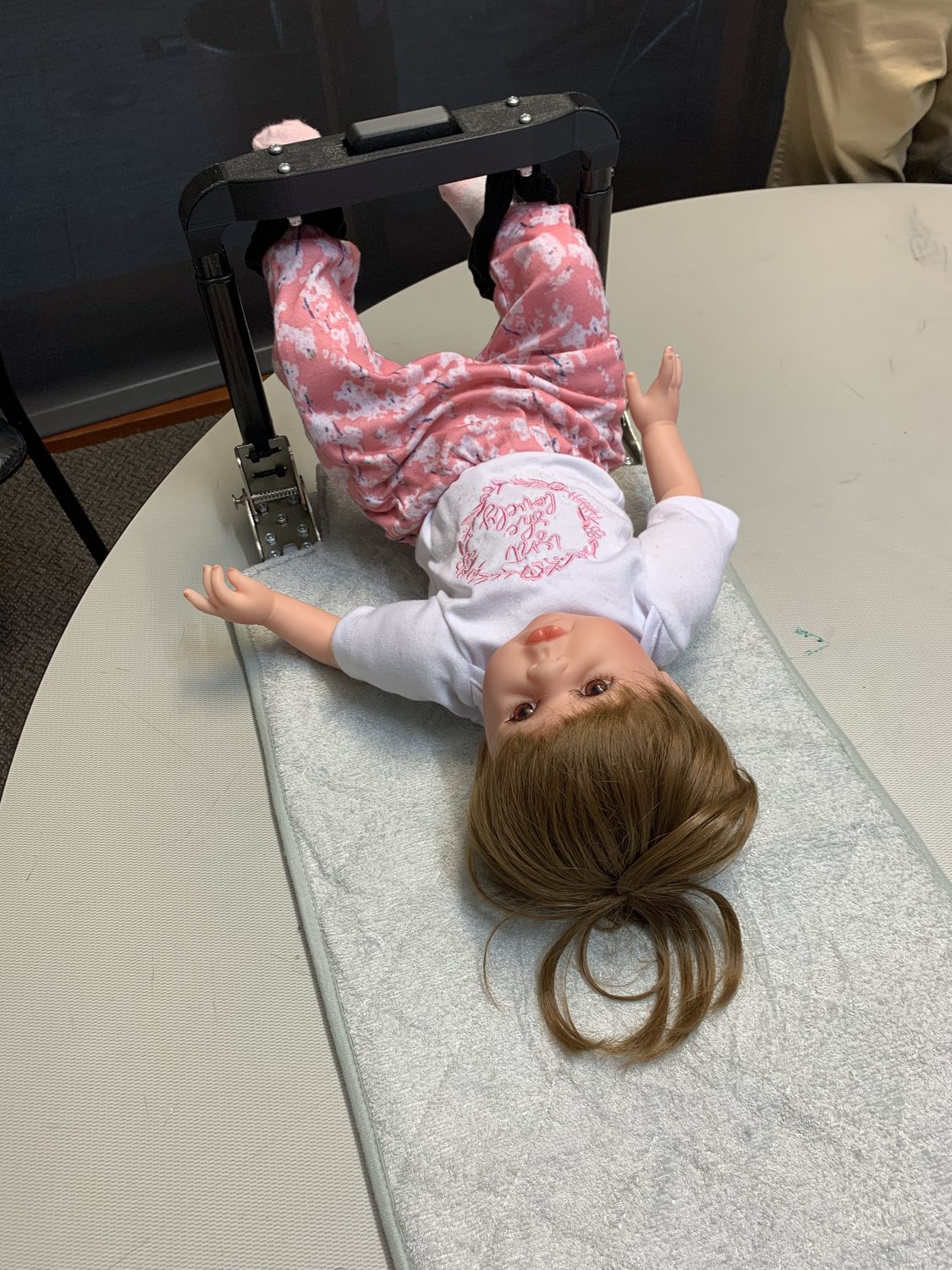
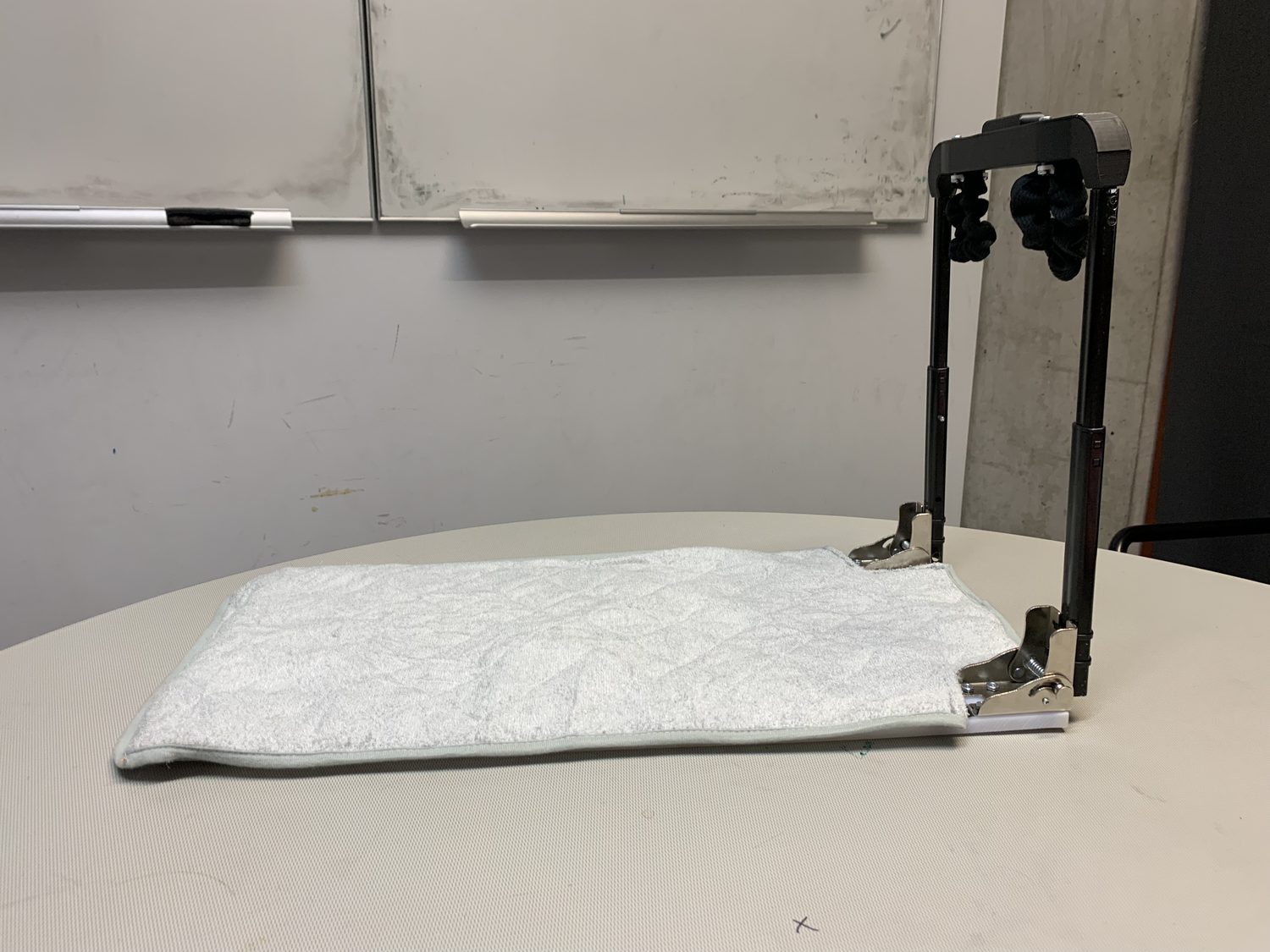
In use with the infant simulator’s legs held in the elastic loops, and the final prototype — HDPE base, changing pad, sidebars locked vertical.
Overview
Our client, Brianne Trainor, a physical therapist at Ascension Alexian Brothers Rehabilitation Hospital, told us her patients with hemiplegia could not change their baby’s diaper without help: one hand holds the infant’s legs up while the other cleans and places the diaper, and those two tasks overlap in time. Our four-person team (Kaival Shah, Chenchen Wan, Eric Oh, and me) built a folding device that takes the leg-holding job; I worked on the sidebar mechanism, hinge integration, and prototype fabrication. Over the quarter we:
- Observed a conventional two-handed change to pin down the real constraint
- Generated three concepts and mockup-tested the winner
- Pivoted from a shop-built height mechanism to a harvested suitcase handle
- Iterated the leg restraint from string to fabric-covered elastic loops
- Fabricated the HDPE base, hinges, and sidebars and validated on an infant simulator
Goals & Requirements
- Every interaction one-handed — unfold, adjust, load legs, refold; a single step needing two hands invalidates the device
- Adjustable leg height with enough range for a growing infant
- Portable and folding, since changes don’t only happen at home
- Cleanable, because it will get soiled
- Safe under an unpredictable load — infants move, and the restraint must hold without hurting them
Design
Of three concepts, a declining ramp, a diaper clamp, and a storage changing pad, the ramp won on function and then failed on mechanism. We built it with wooden slides to set leg height, and it failed immediately: the slides had too much friction to move one-handed, and the height notches were fiddly to engage. User testing surfaced a third, more fundamental issue. The ramp blocked access to the baby’s back, exactly where you need to reach.
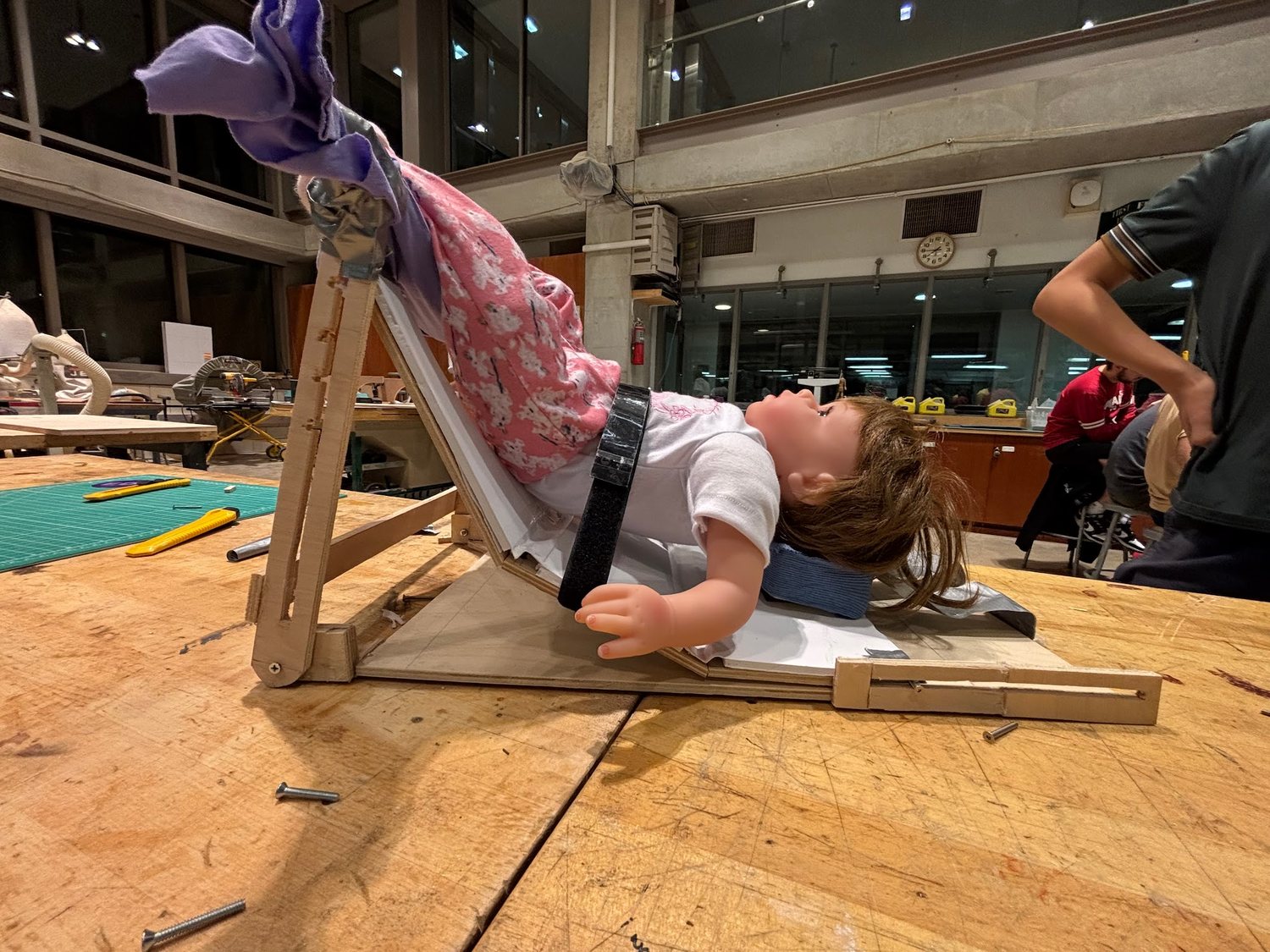
The Decline mockup, built and loaded — it holds the legs, and blocks the access underneath
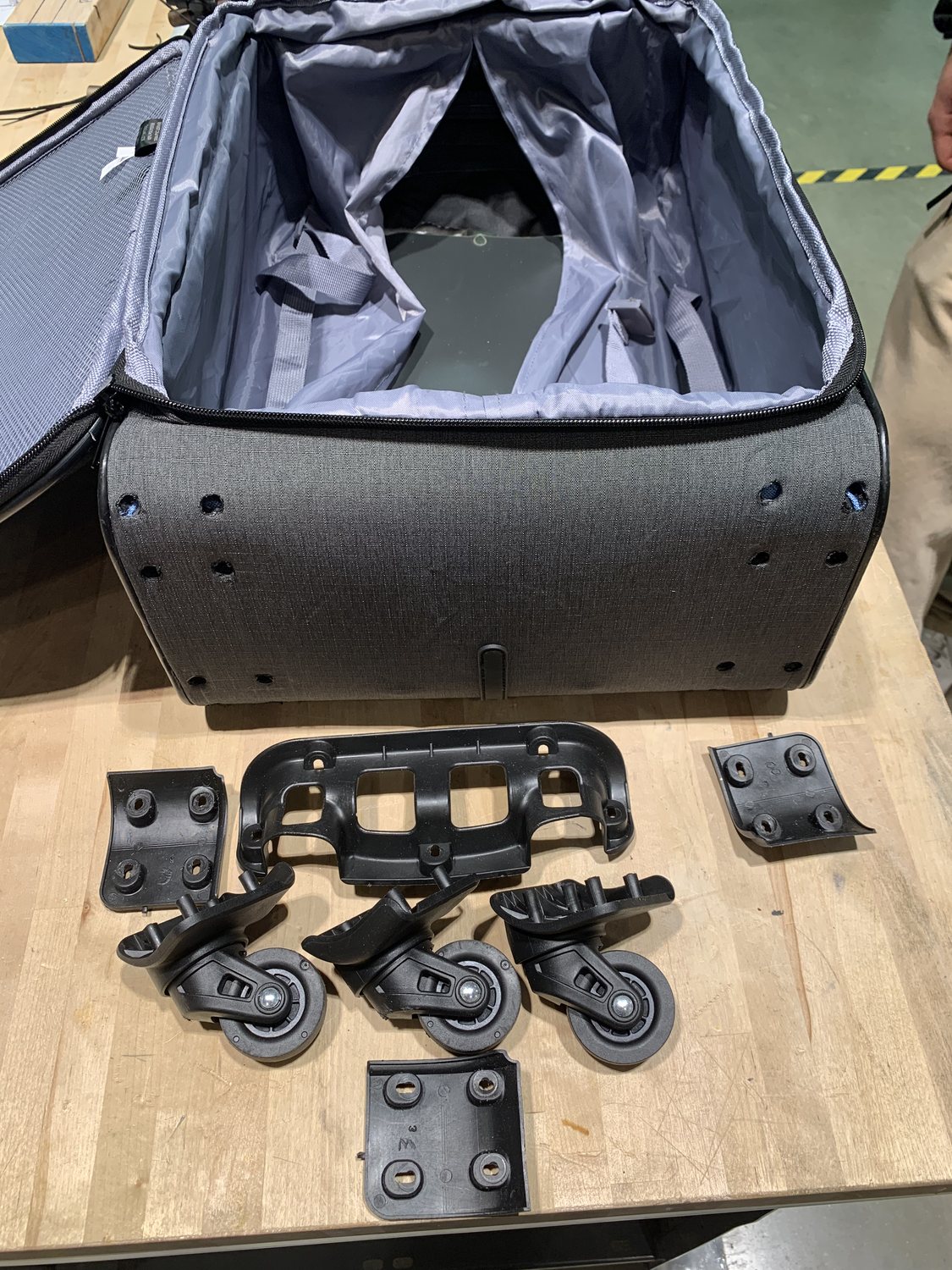
The $55 suitcase, stripped for its handle mechanism and hardware
Design review pushed on the insecure locking, pinch points, uncleanable materials, and the unknown maximum infant weight. So we stopped building a height mechanism and bought one. A rolling-suitcase handle already solves the problem: low-friction telescoping tubes, a button-actuated spring pin, discrete locking heights, engineered for one-handed use and millions of duty cycles. We bought a $55 suitcase and harvested its handle, and the auto-locking hinges came the same way — off-the-shelf folding table-leg brackets that lock under load and release on a button.
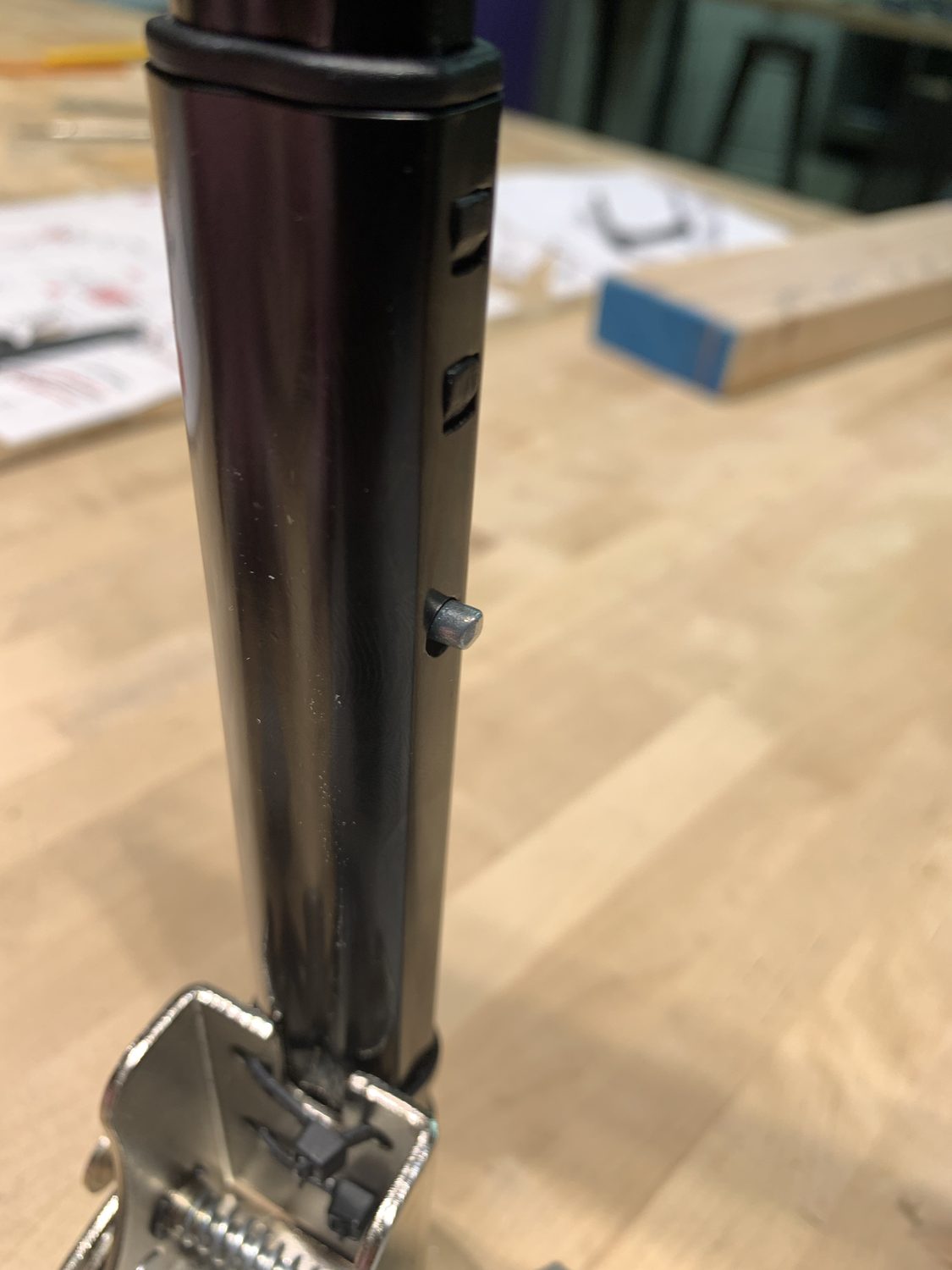
Height adjustment — spring pin in the hole row
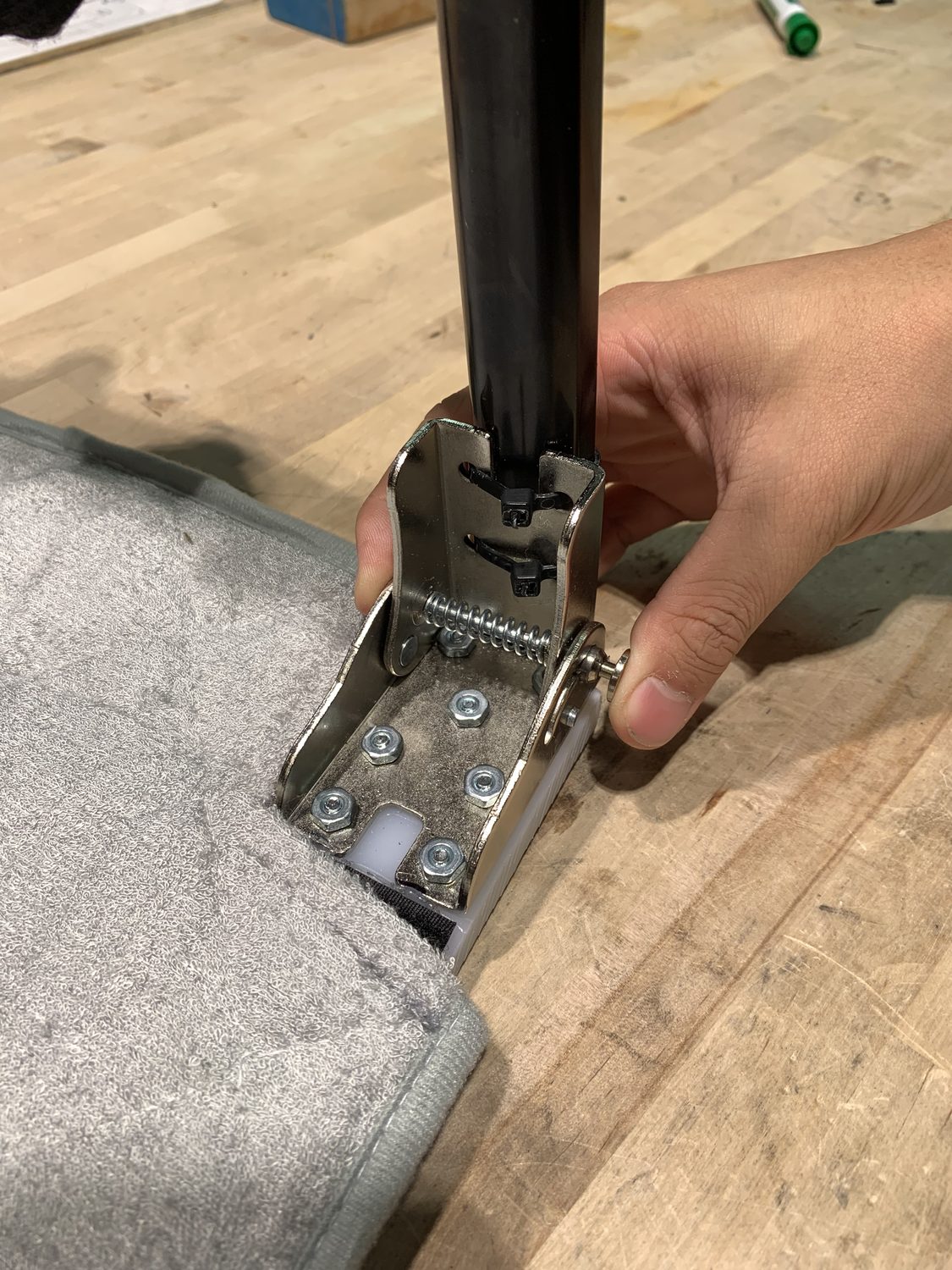
Auto-locking hinge at the sidebar base
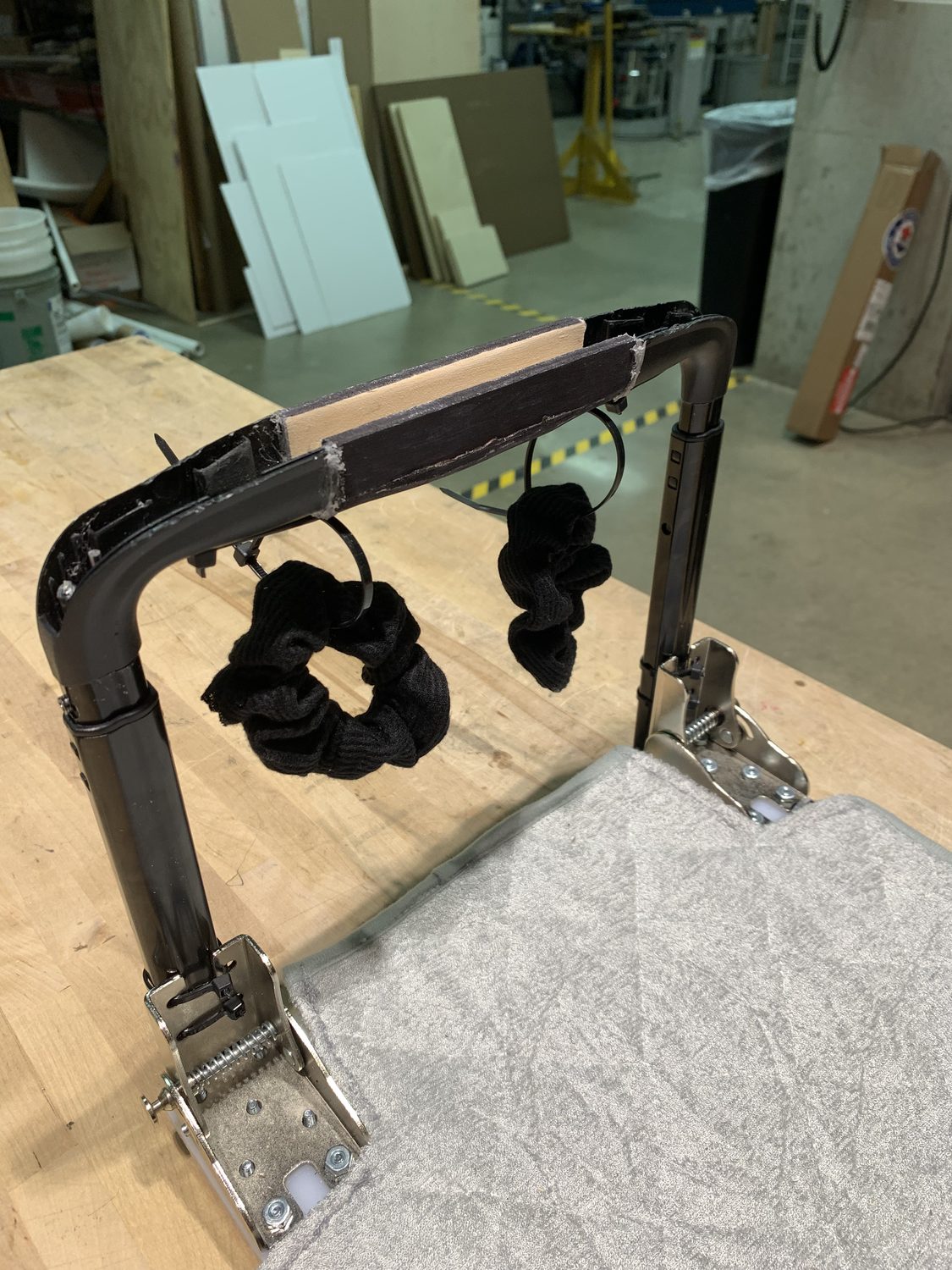
Leg loops spaced apart on the handle
The leg loops took the most iteration: string was tried first and cut into the legs, and fabric-covered elastic solved three things at once — it stretches enough to get a leg in one-handed, distributes pressure over the ankle, and leaves the infant enough movement not to fight the restraint. Spacing the loops apart across the handle spreads the legs and opens up the access that killed the ramp concept. The base is 3/8″ HDPE with a velcro-attached, machine-washable changing pad, and folded, the device is roughly the thickness of the pad.
Folded flat → sidebars raised and locked → height extended. One hand throughout.
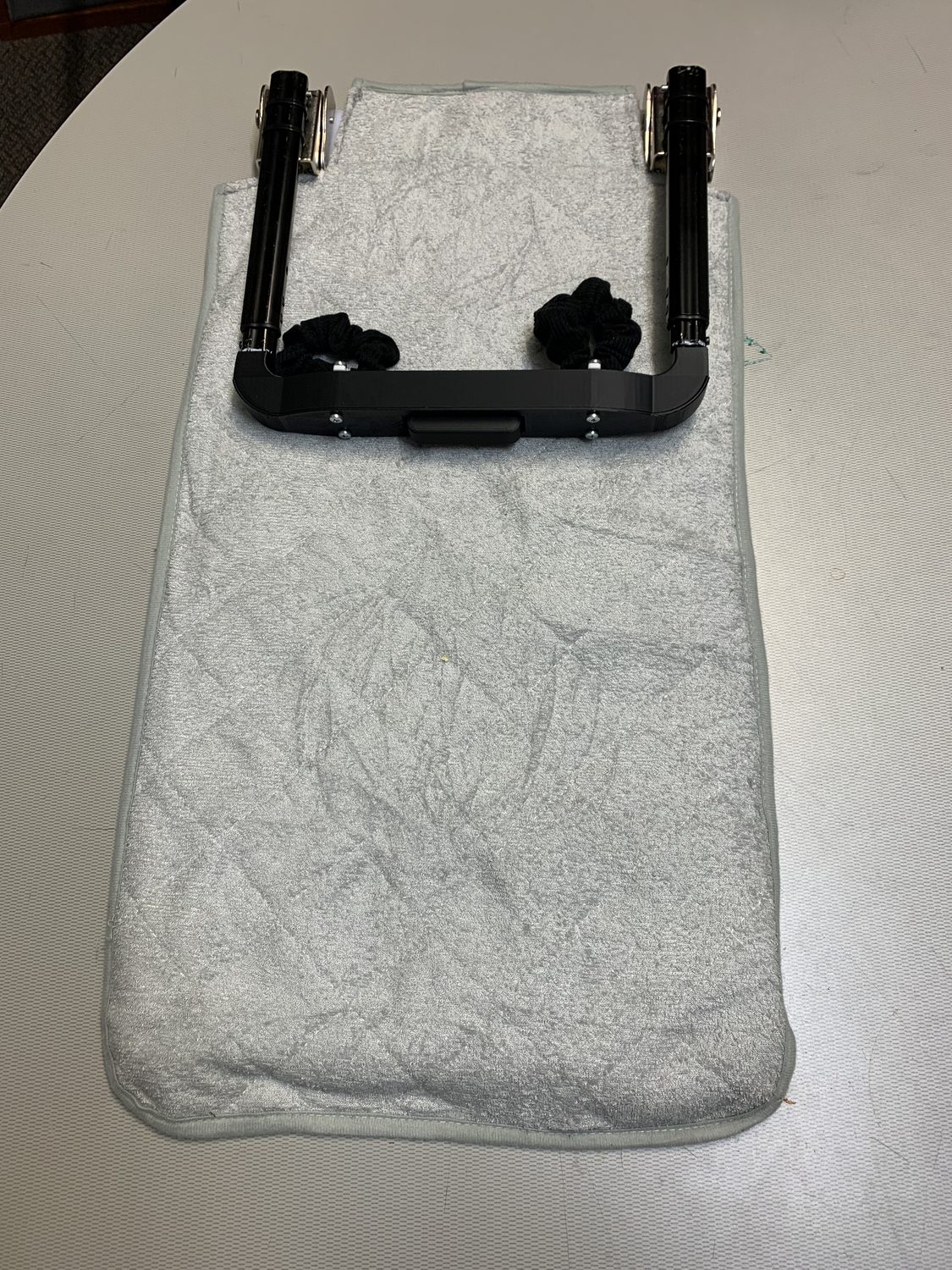
Folded, the device is roughly the thickness of the pad
Outcomes
- Working prototype with the full unfold → adjust → load → refold sequence demonstrated one-handed (video above)
- Height mechanism and hinges reused from proven off-the-shelf hardware
- Fabric-covered elastic loops that load one-handed, spread pressure, and keep the rear reachable
- Known gaps: height is discrete (inherited from the suitcase mechanism), and refolding needs both hinges released one at a time — the least one-handed part of the device