
NUSTARS Battery Retention Sled
NUSTARS Rocketry — ESRA IREC 2025–26 · Jan 2026 – present
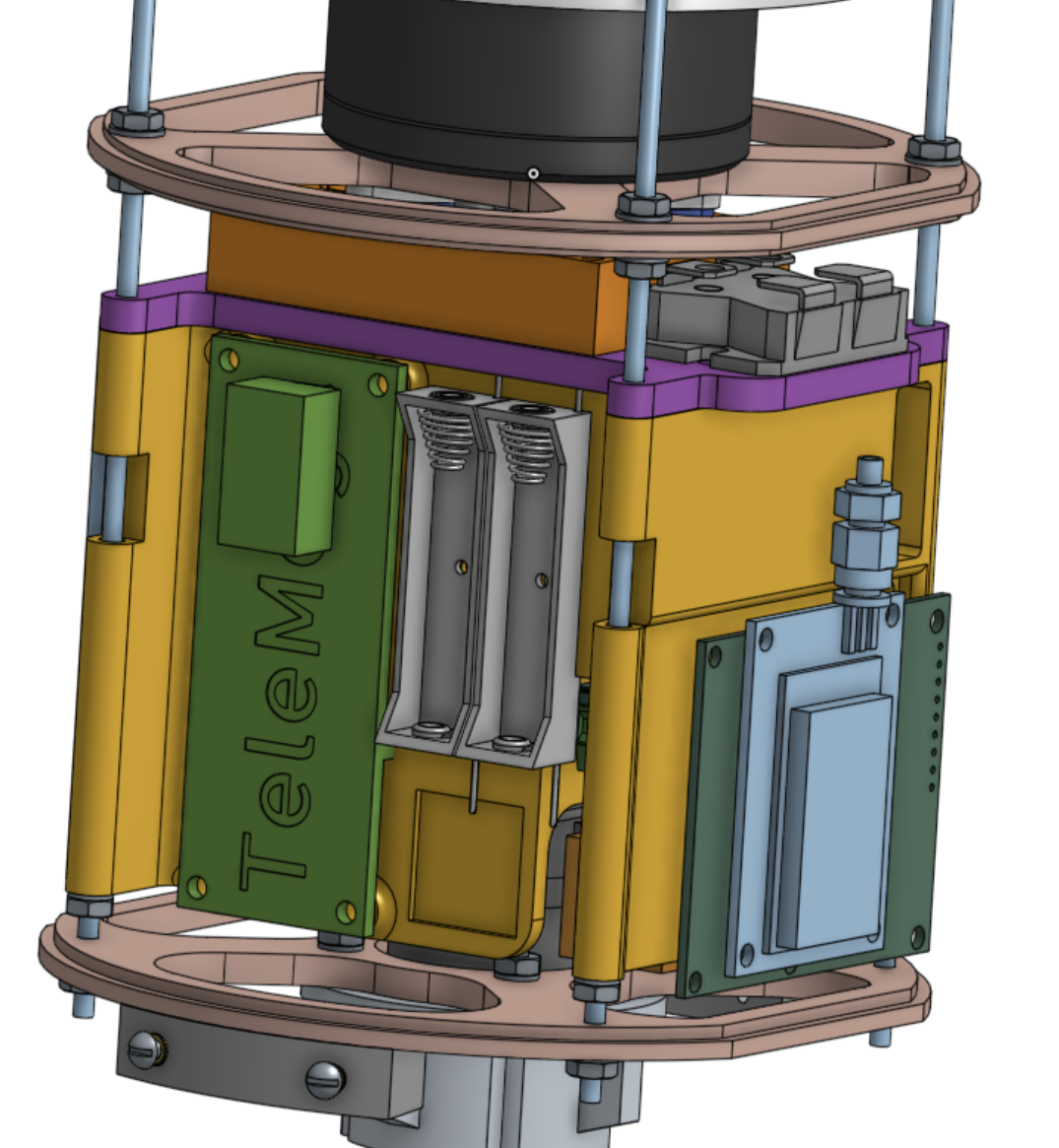
The ATLAS payload bay — team assembly. Two bulkheads on threaded standoffs carry the TeleMega flight computer, the cells, camera hardware and the antenna stack.
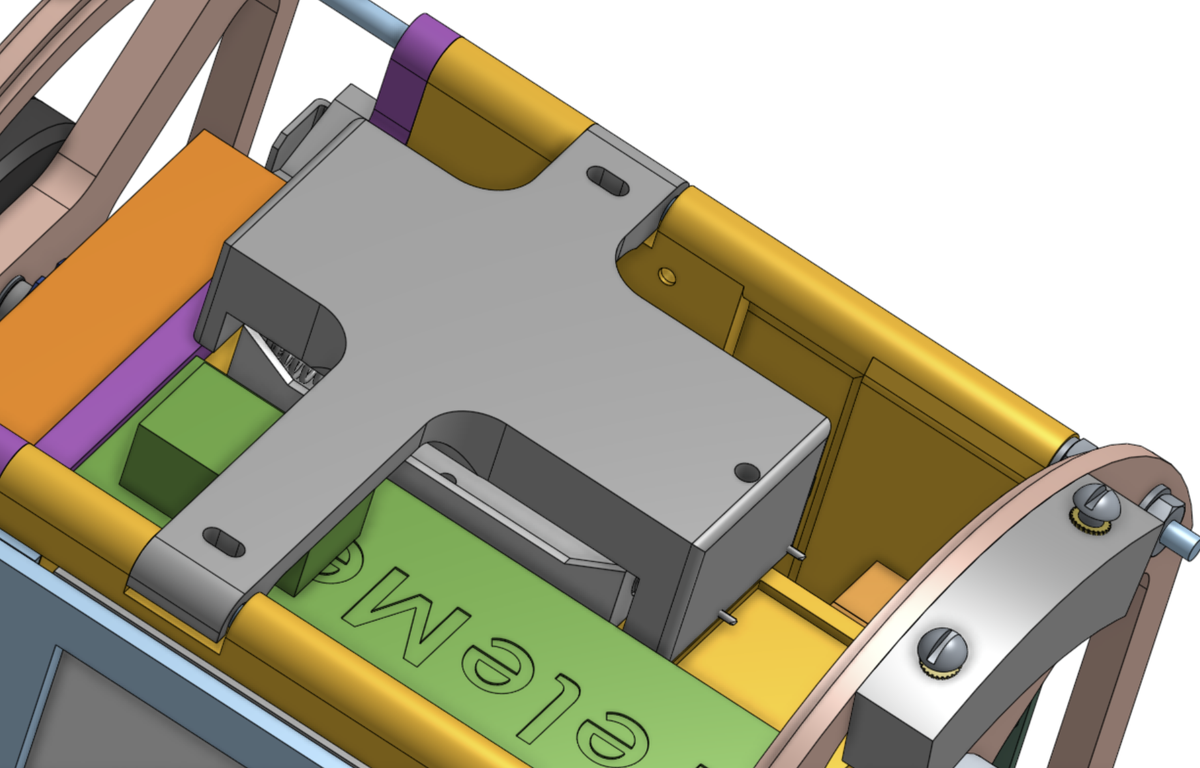
My part, installed — the grey cross-shaped plate. Its long arm clamps the cells; the wide face passes over the TeleMega and holds it down as a secondary job.
Overview
For NUSTARS’ ATLAS payload — flying on the team’s ESRA IREC 2025–26 competition rocket to roughly 7,500 ft — I designed the battery retention sled: a 3D-printed plate that clamps the payload’s cells so they cannot move under boost. The sled is my part; the payload as a whole is the work of the NUSTARS payload team. I:
- Designed the cross-shaped plate in Onshape around the bay’s fixed component stack
- Packaged it into the volume left between the TeleMega flight computer, camera hardware, and antenna stack
- Specified brass heat-set inserts in the print and nylon-insert lock nuts at the bulkhead
- Laid out four fastening points at the lower bulkhead
- Chose FDM printing to manufacture
Goals & Requirements
- Nothing in the bay may move under boost. Loose cells carry real mass and sit directly against the flight computer
- Fit the volume left over in a densely packed bay
- Easy access. The team has to reach everything between flights
- Survive repeated removal and reinstallation without degrading
- Stay fastened through sustained broadband boost vibration
Design
The plate is only wide where it needs to press. The long arm runs across the battery holders, the broad face passes over the TeleMega and lightly restrains it as a secondary job, and everywhere else the material is cut away which keeps the part light and leaves the neighbouring components reachable. Turned-down edges around the perimeter locate the plate against the components below it, so clamping load is reacted through the sled’s walls rather than by friction alone.
Brass heat-set inserts melt into the print and give it real machine threads that carry load into the surrounding plastic, so the sled can be torn down and reinstalled without degrading. It fastens at four points on the lower bulkhead. Two outboard on the threaded standoffs, two inboard through the bulkhead, all with nylon-insert lock nuts, because a plain nut on a smooth thread will walk loose in a boost vibration environment. The nylon collar’s prevailing torque doesn’t depend on the joint staying in tension, so retention survives the flight even if the clamped stack settles slightly.
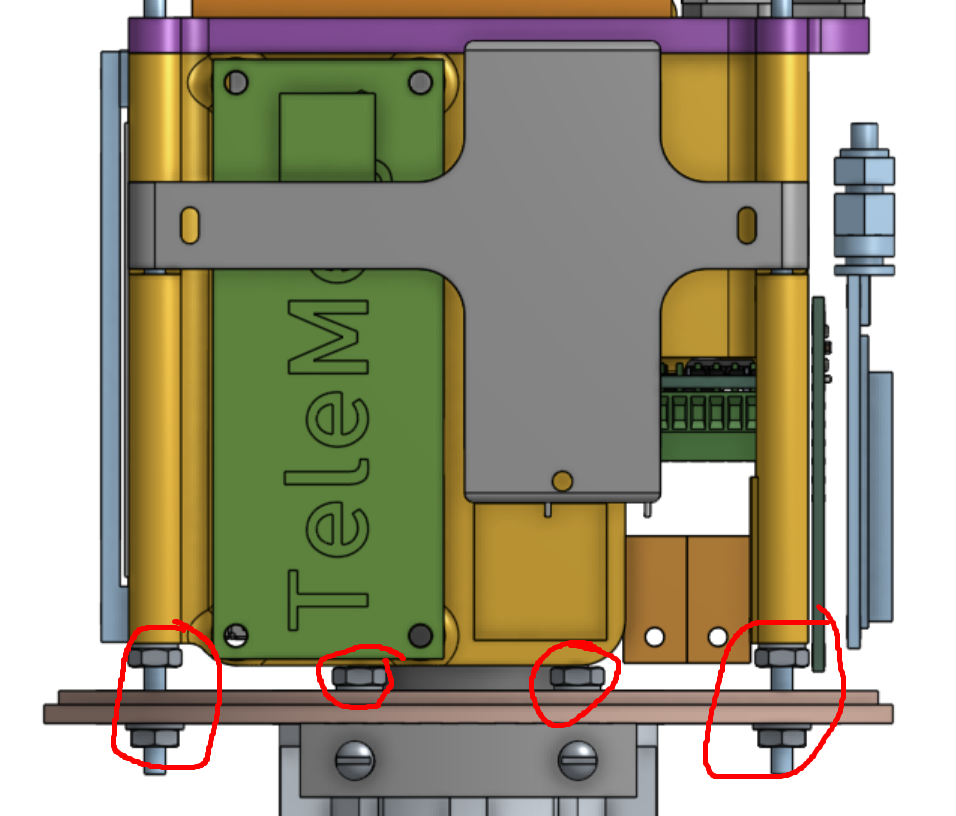
The four fastening points, circled — two outboard on the standoffs, two inboard through the bulkhead.
The assembled bay is below: a LoRa radio and BMP585 barometer stacked on the printed structure, a Raspberry Pi and camera behind them, power distribution and harness through the middle, all captured between two machined bulkhead rings on threaded standoffs. Fitting retention into what volume remains, without blocking access to any of it, was most of the design problem.
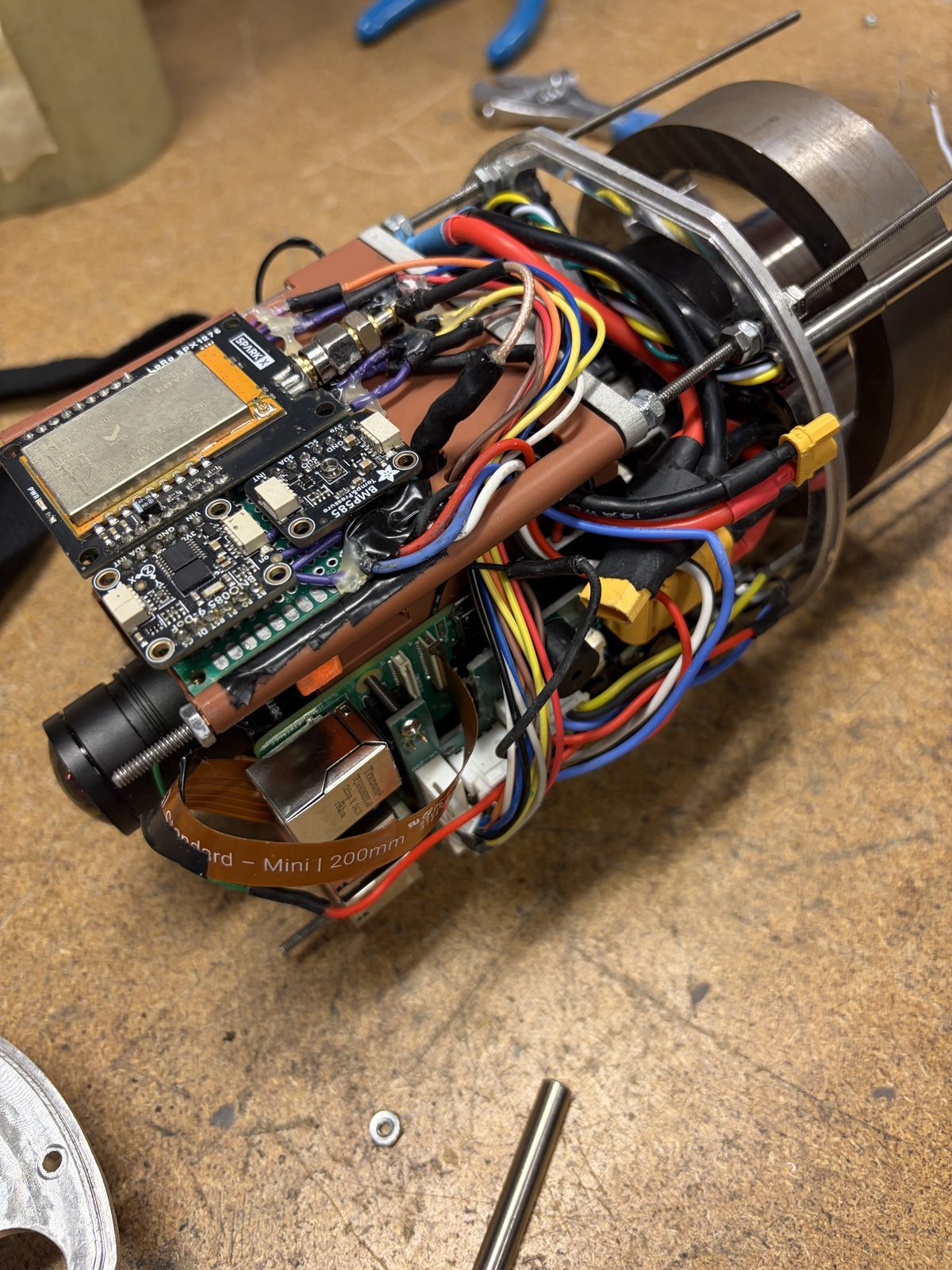
The assembled payload — team hardware, shown for context
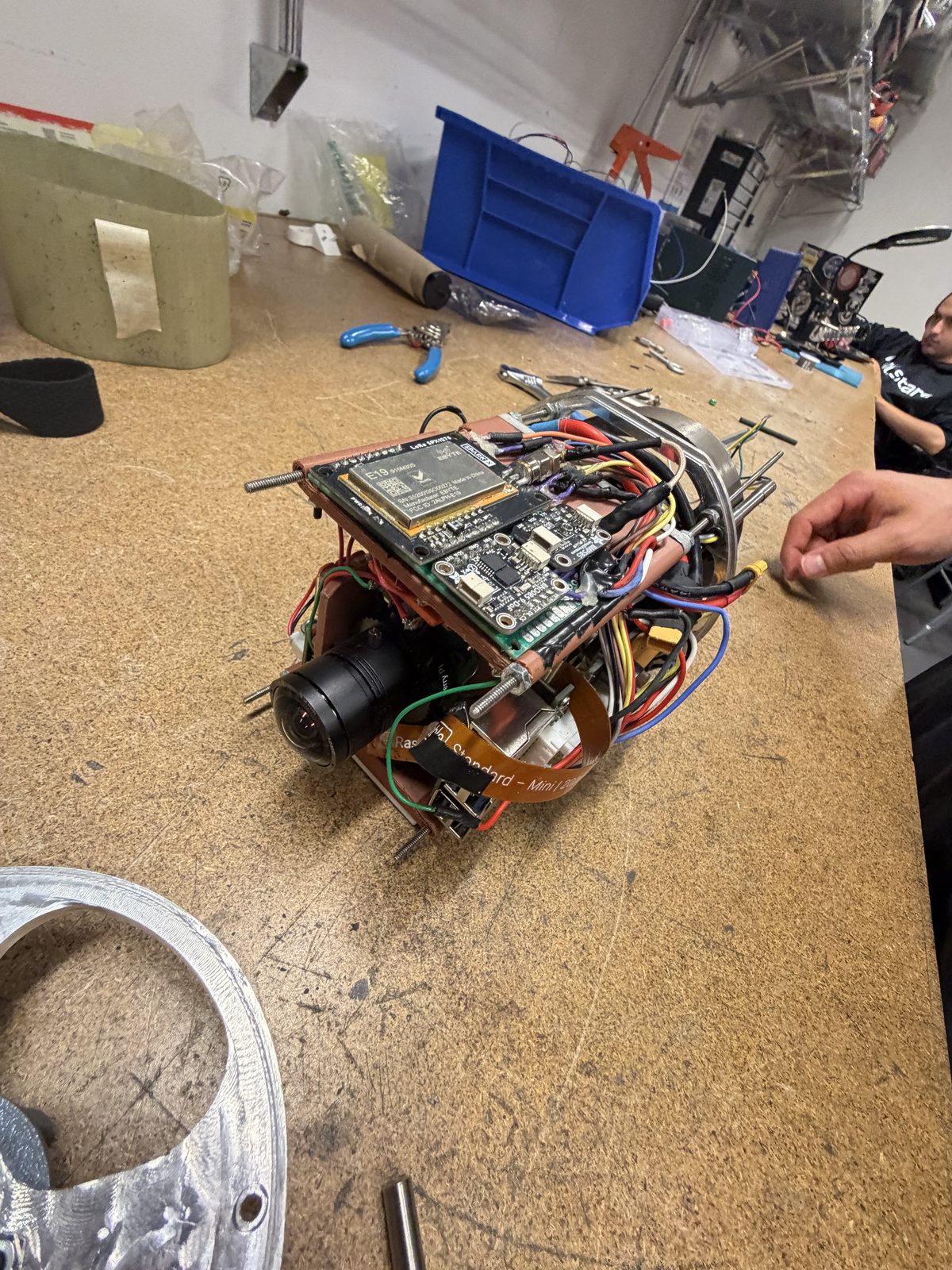
On the bench during assembly — team hardware, shown for context
Outcomes
- Sled designed, printed, and installed in the ATLAS bay, clamping the cells at four bulkhead fastening points
- Removable and re-installable between flights without thread degradation, via the heat-set inserts and lock nuts