
MagClean
Design Thinking & Communication — Northwestern · Spring 2025
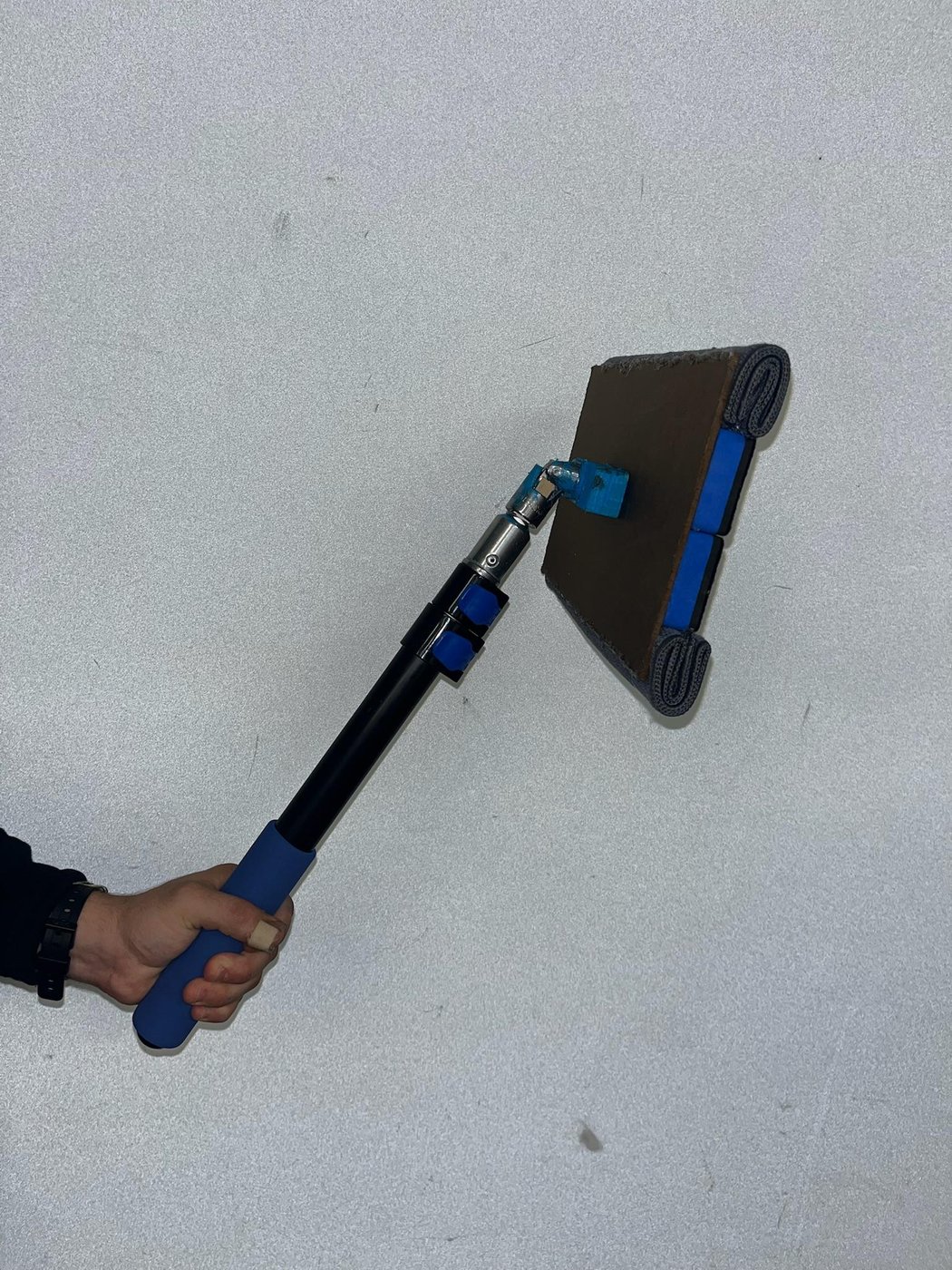
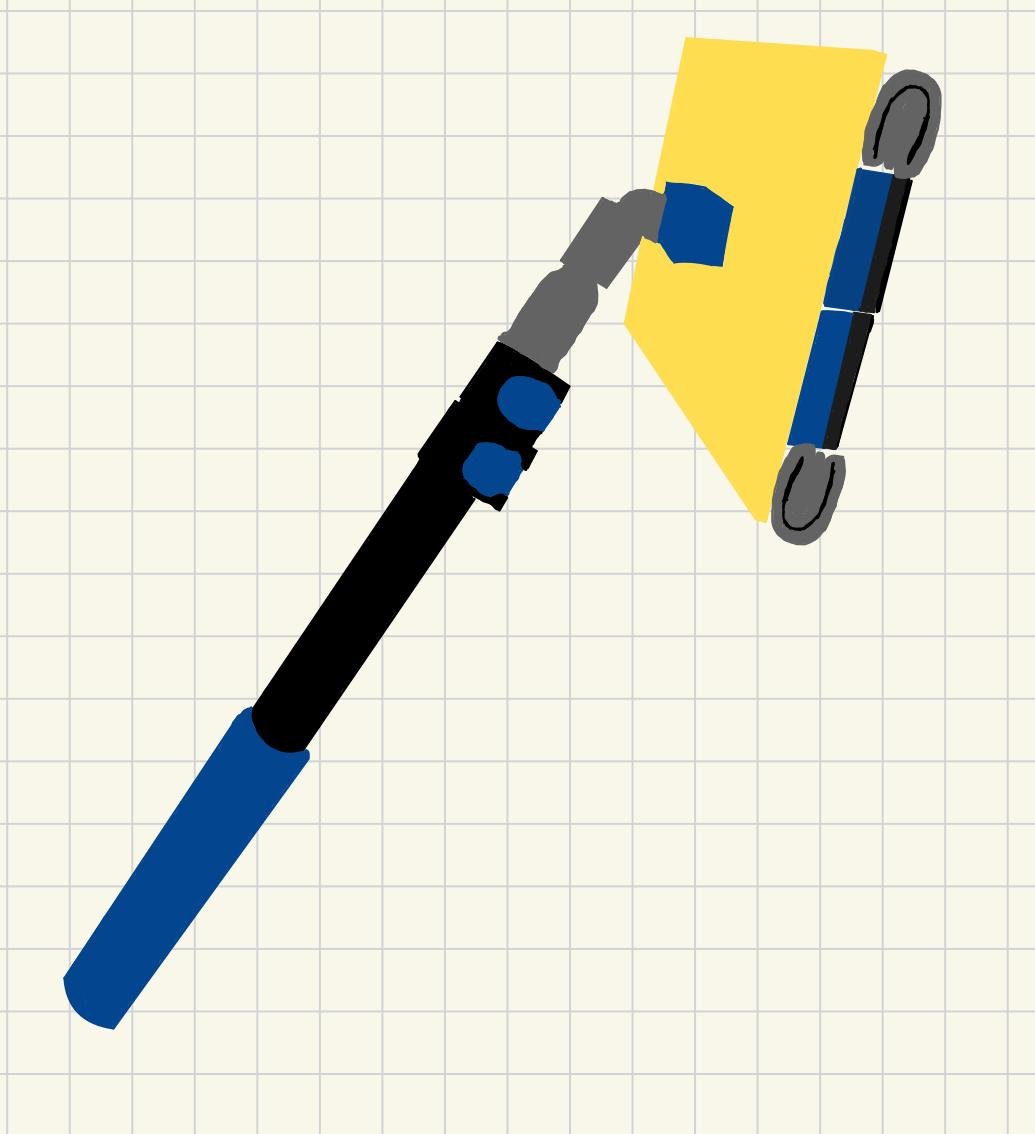
The finished tool on a classroom board, and the concept diagram.
Overview
Northwestern’s DTC classrooms run back-to-back sessions on wall-sized whiteboards, and the standard felt eraser is small, leaves ghosting, and forces instructors to fetch a stool for the top of the panel. Our four-person team (Simon Kaminer, Paul Akpalu, Diego Niiler, and me) built a non-electric, magnet-assisted eraser on a telescoping pole; I designed and built the cleaning head end to end, produced the concept sketches for the pole and rotating head, and machined the pole assembly. Over the quarter we:
- Interviewed the client — a DTC instructor who cleans these boards between sections
- Built and tested three concept mockups
- Designed and built the dual-surface magnetic cleaning head (my part)
- Machined the telescoping pole on the manual mill
- Ran an expert user test and timed cleaning trials on real classroom boards
Goals & Requirements
- “Speed over deep cleaning” — the client’s first priority, which killed every concept optimised for scrubbing power
- Clean a full classroom board in under a minute, removing visible ink in a single pass
- Nothing permanently mounted — the whiteboard walls fold and have to store
- No consumables and no power — anything left loose in the room walks off
- Suit the shortest and tallest users without a stool, and don’t abrade the board surface
Design & Build
Several concepts were designed, built, and tested rapidly. The gravity cleaner cleaned poorly, but its magnets demonstrably raised pad pressure. The Swiffer-style mockup contributed the pad, swivelling head, and telescoping pole; its spray mechanism was dropped as over-built. The reservoir concept contributed the absorbent pad. Total build cost: $70.94, entirely off-the-shelf apart from the shop-cut backing.
Gravity cleaner — the magnets survived
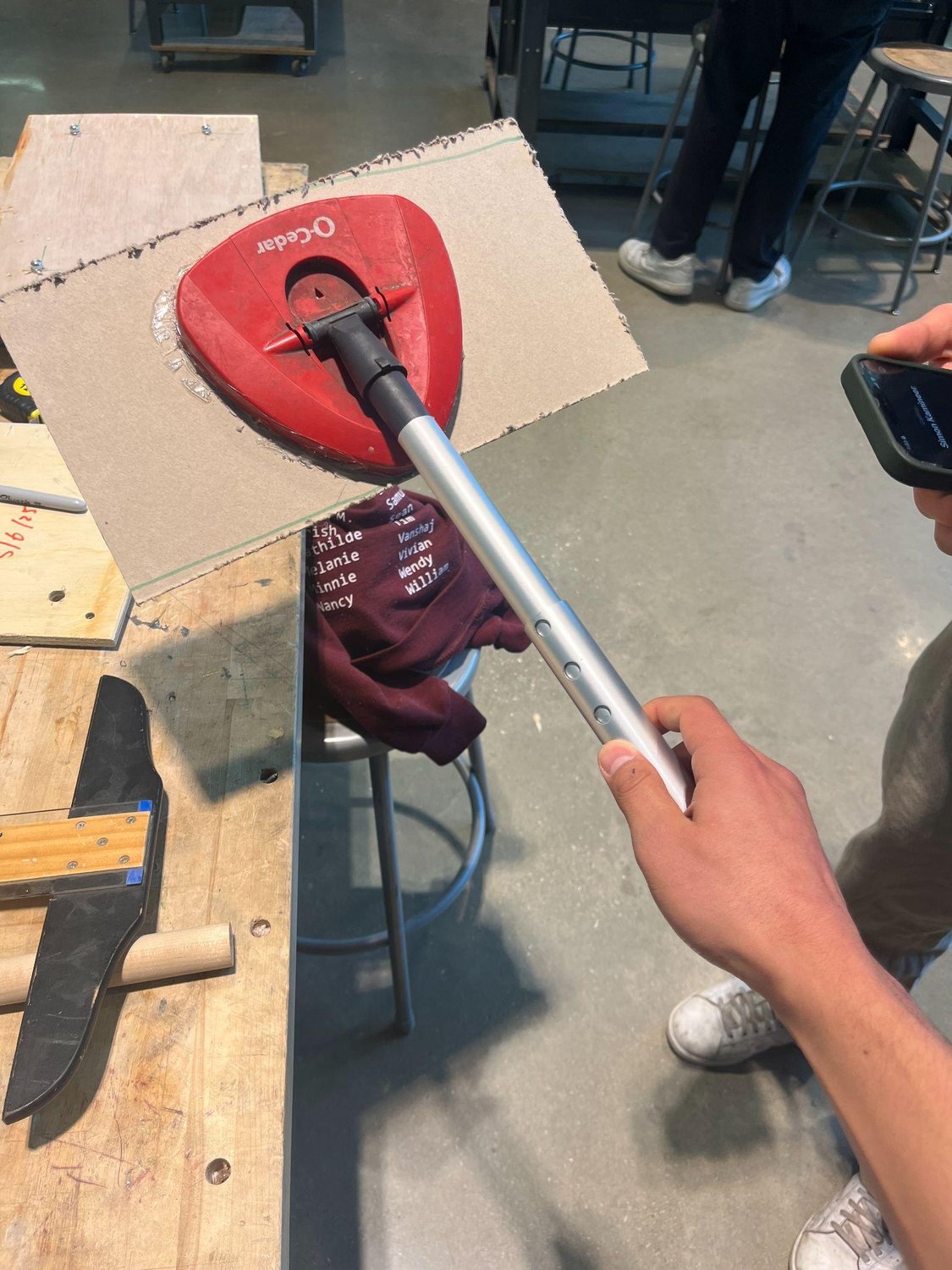
Swiffer-style — pad, swivel head, pole
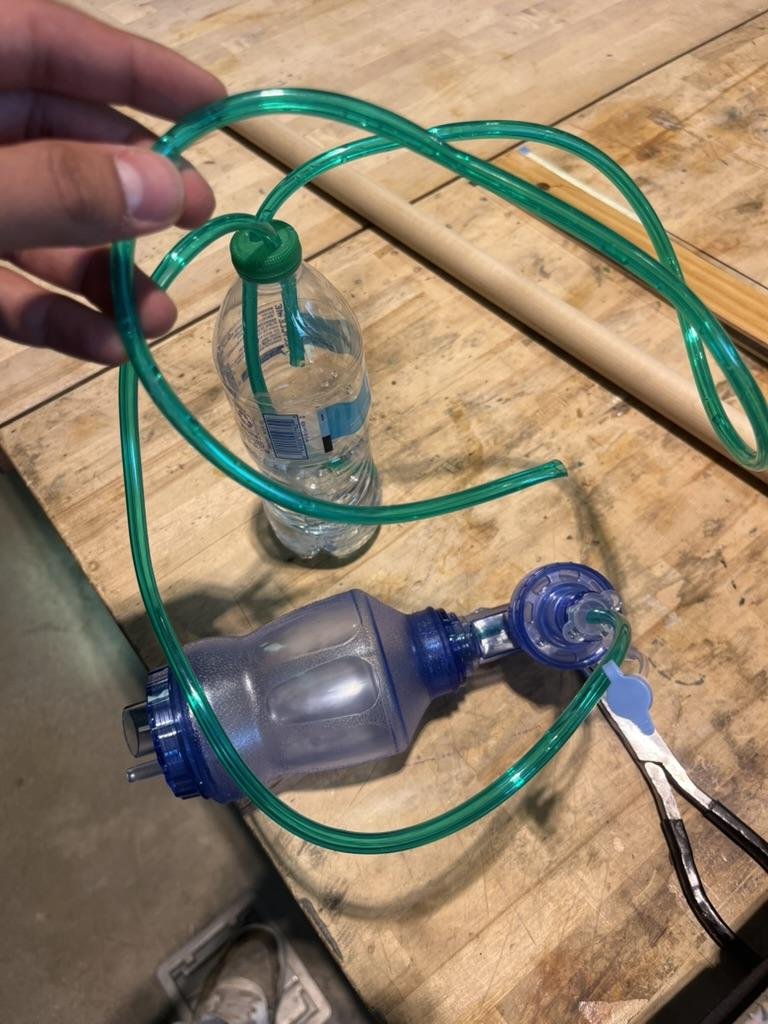
Reservoir — contributed the absorbent pad
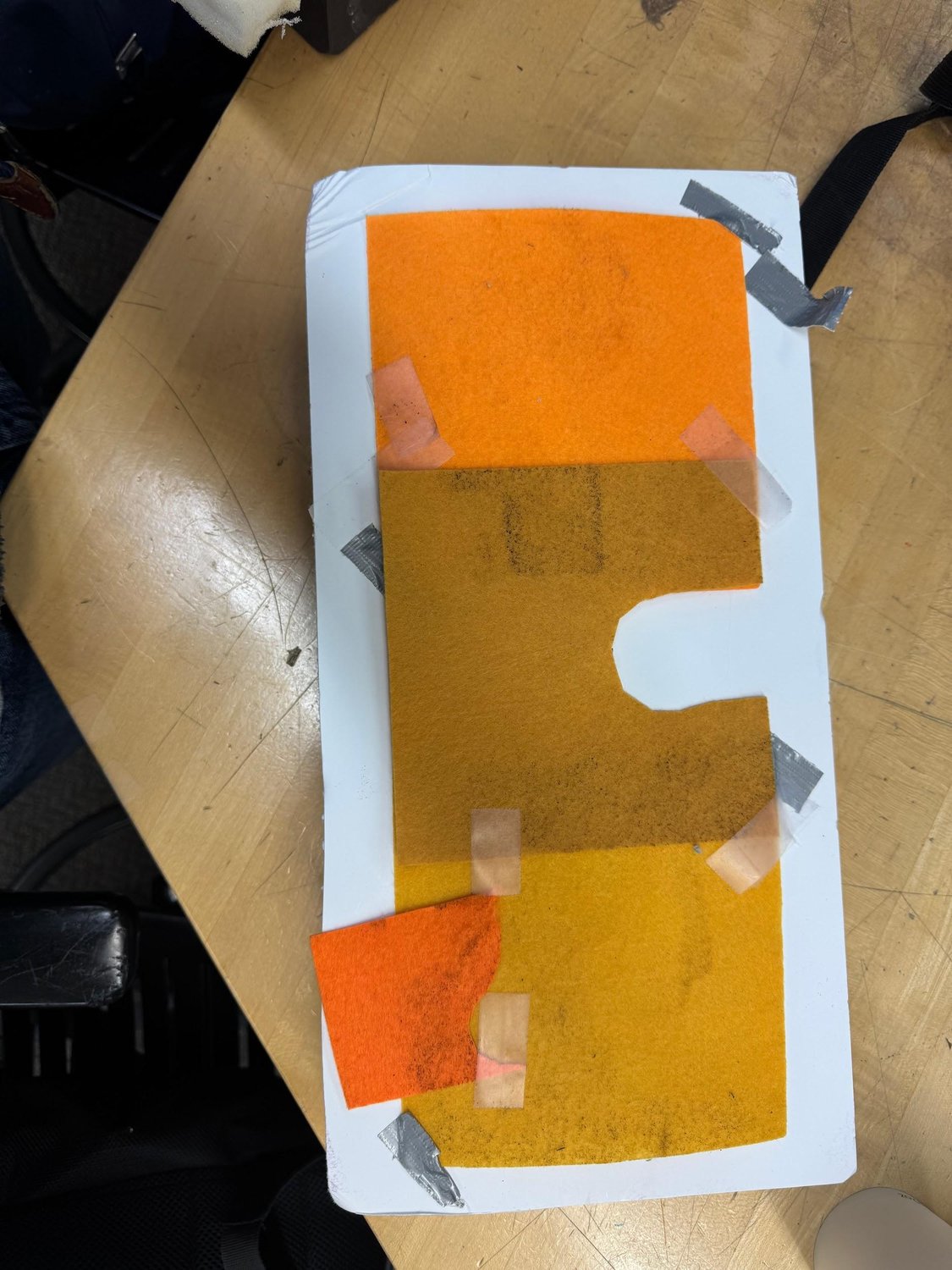
The final design merged several prototypes. Neodymium magnets behind the pad pull the head into the steel-backed board, supplying contact pressure the user would otherwise have to push for to decrease fatigue. Each magnet sits recessed in a pocket carved into the foam backing: a proud magnet would ride the pad off the board, and recessing spreads the pull across the backing rather than a glue joint. The head is about 12 × 7 in (roughly 7× the board area per stroke of a standard classroom eraser) with a dual surface: dry-erase blocks down the centre for marker, and microfibre strips along both long edges (the trailing edge changes with stroke direction) for the ghosting the felt eraser leaves behind.
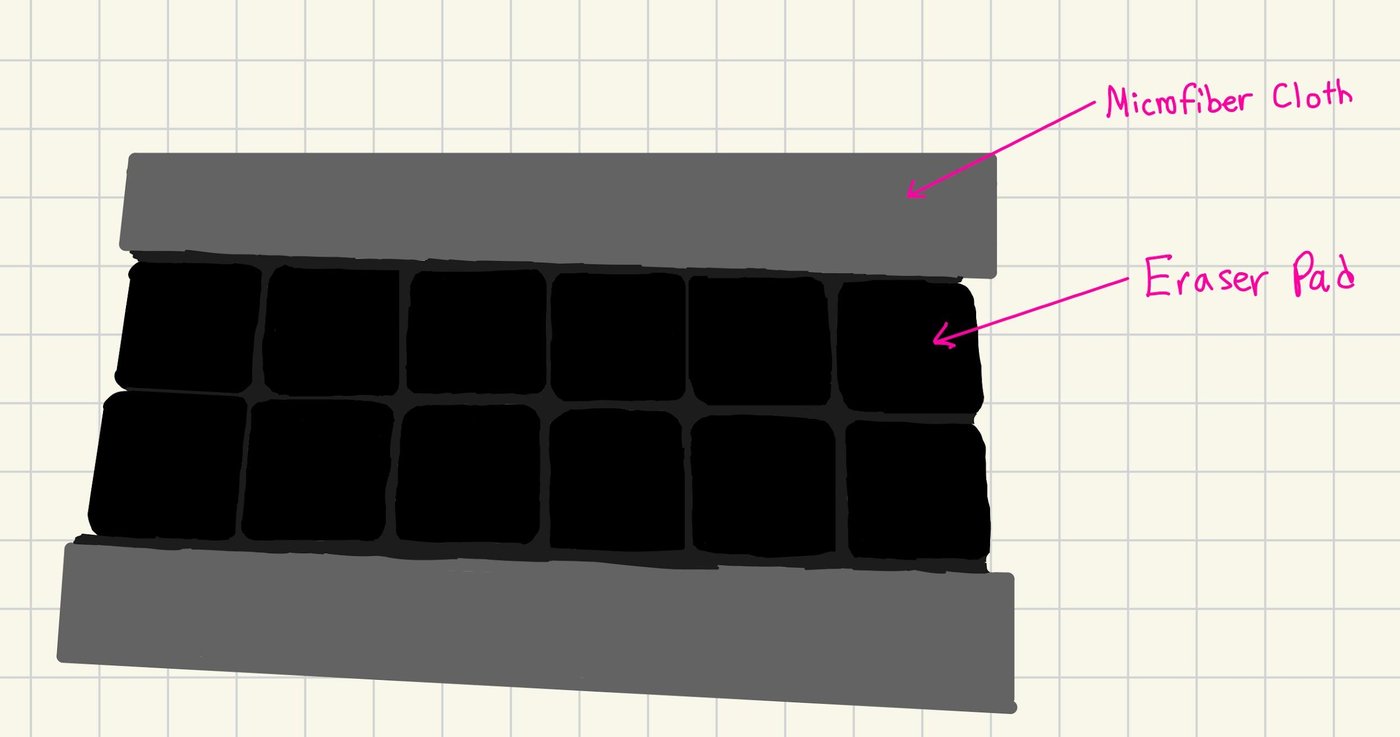
My pad sketch — dry-erase centre, microfibre border
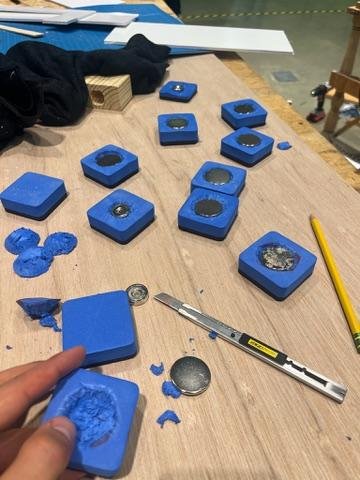
Magnet pockets carved into the foam backing
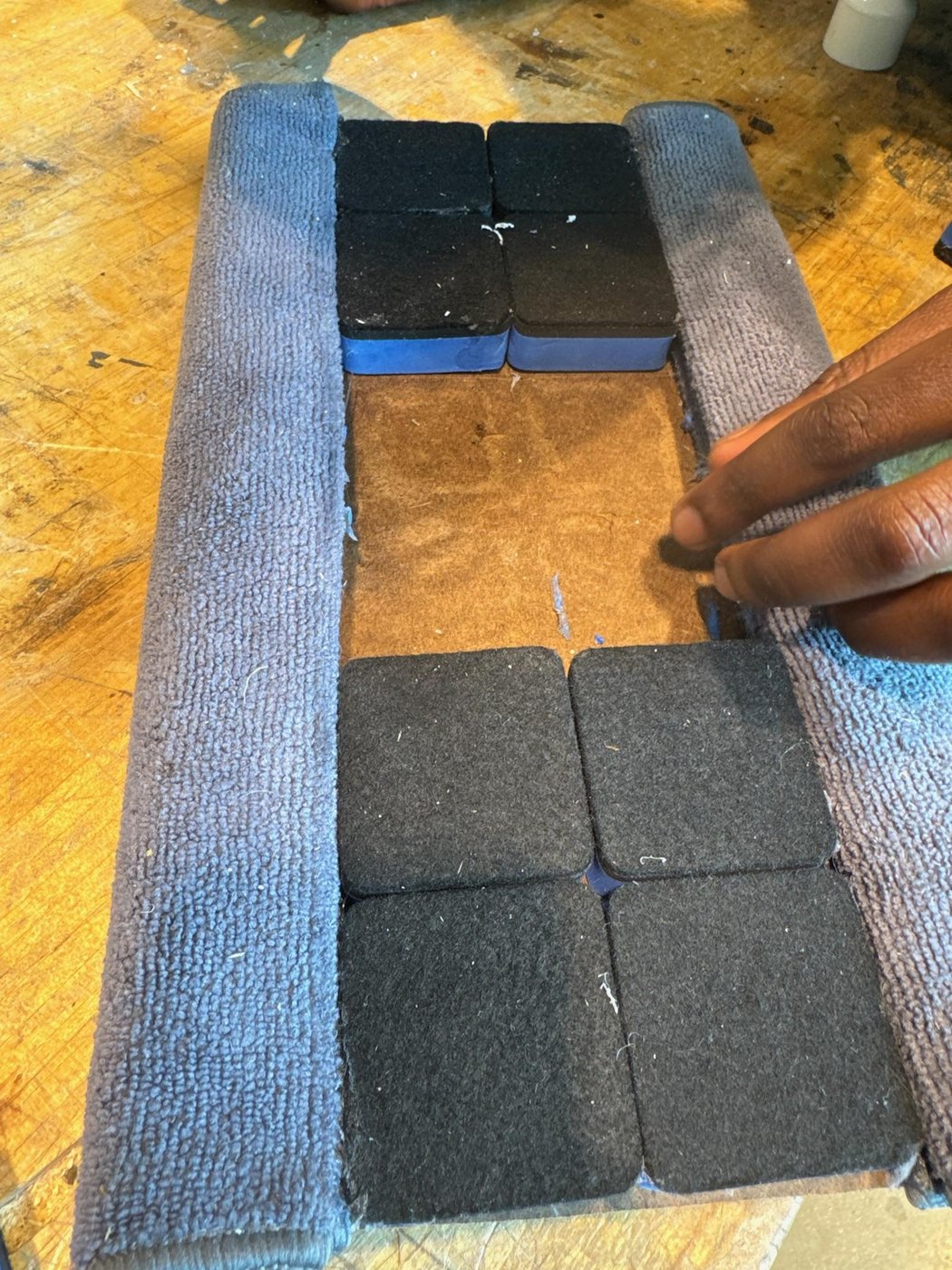
Dual-surface layout — eraser centre, microfibre edges
The hinged pole mount went on the back of the head, and I machined the telescoping pole (1.5–3 ft) on the manual mill. An expert user test with Professor Birdwell, a DTC instructor and the target user, on 8 May 2025 found the weakness immediately: the head wasn’t applying enough pressure for its size, since a large pad spreads the user’s force over more area.
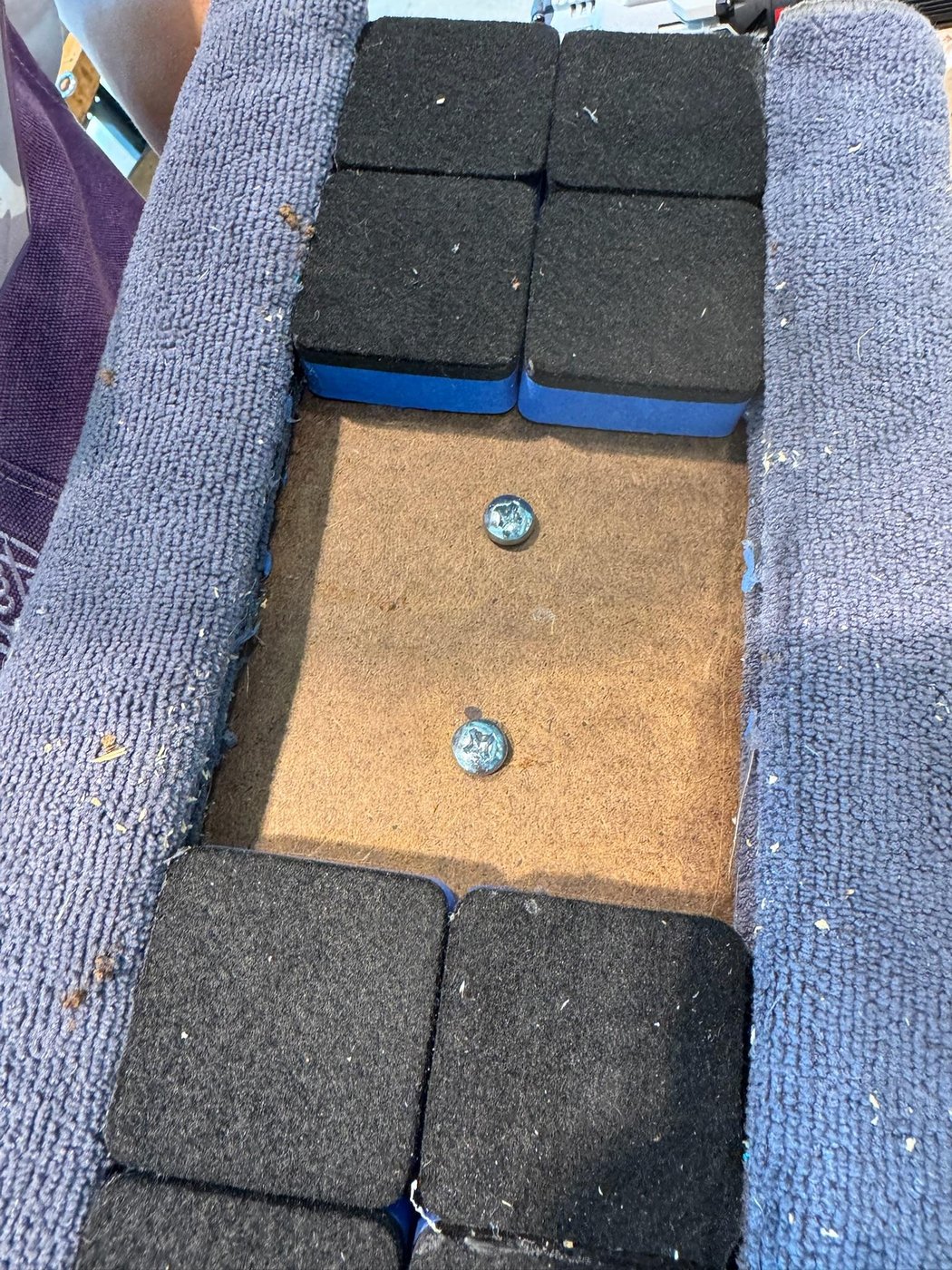
Finished head, ~12 × 7 in
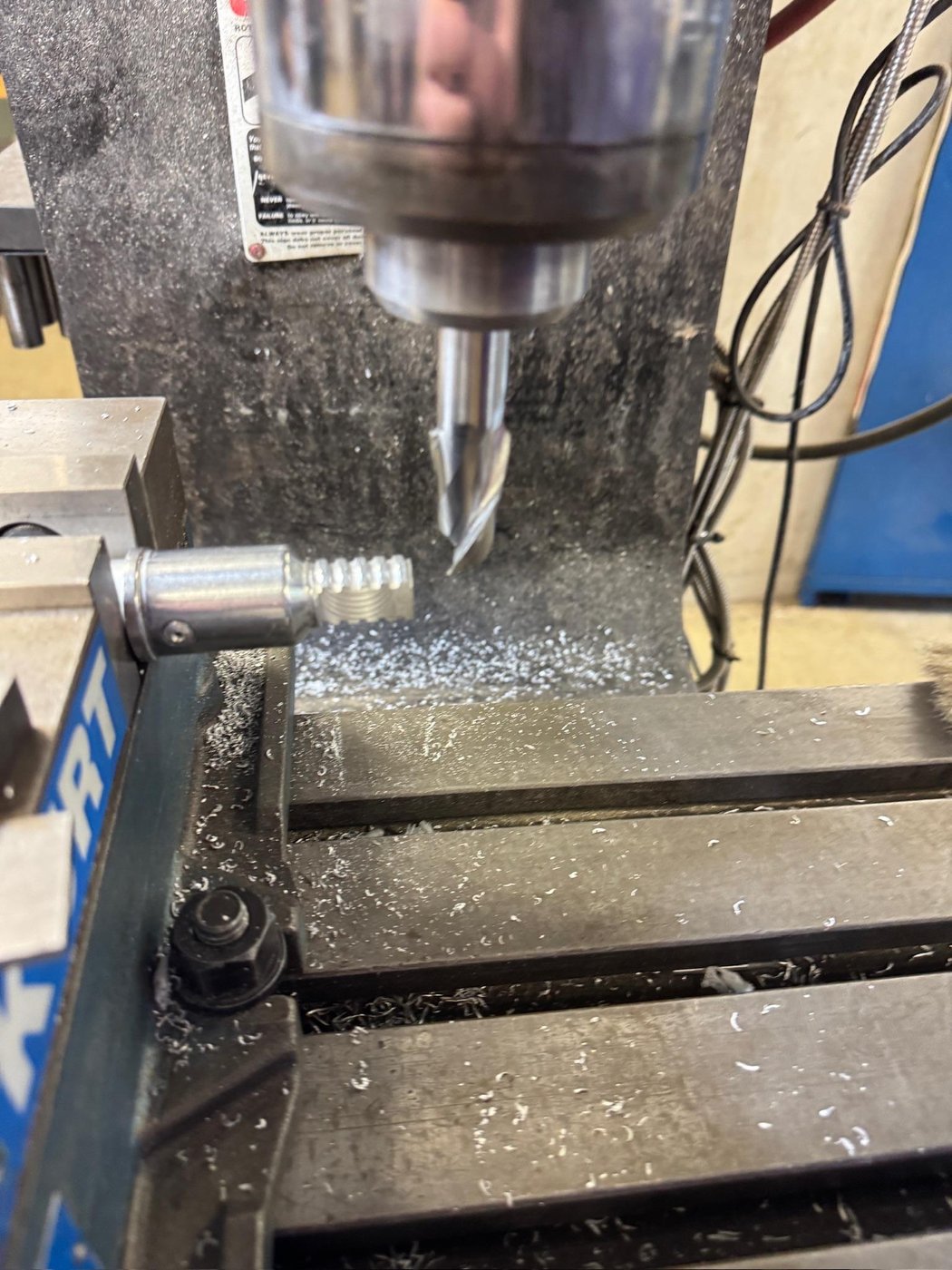
Pole machined on the manual mill
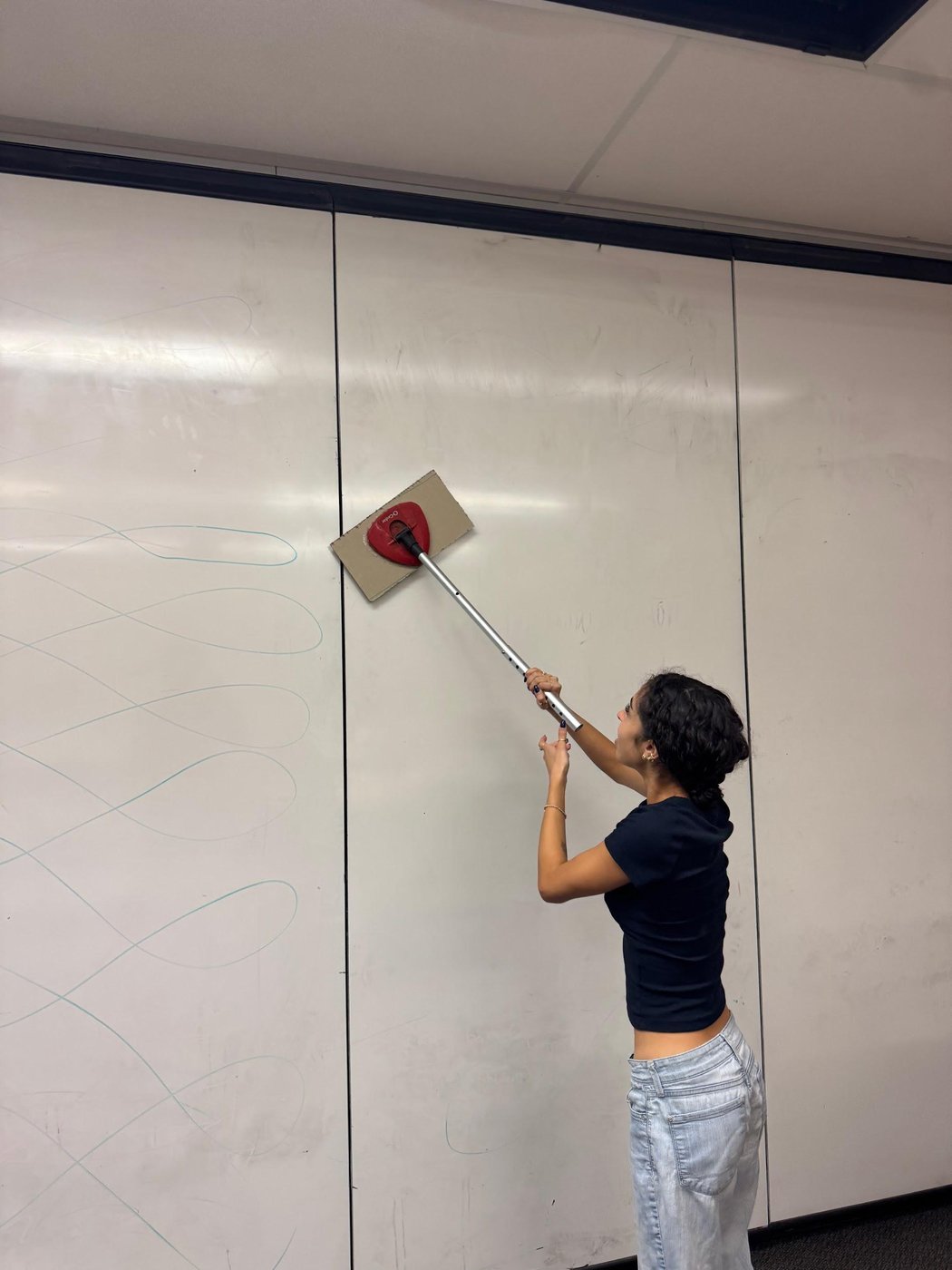
A timed run in the classroom
Outcomes
- Full board (4,725 in²): 98–105 s with the standard felt eraser → 48–52 s with MagClean, ~50% faster
- Spot clean (35 × 31 in): 14 s → 8 s, ~43% faster
- ~7× the board area per stroke of a standard eraser, for a $70.94 build cost
- Testers reported less effort and better reach on tall panels, with less ghosting on inspection
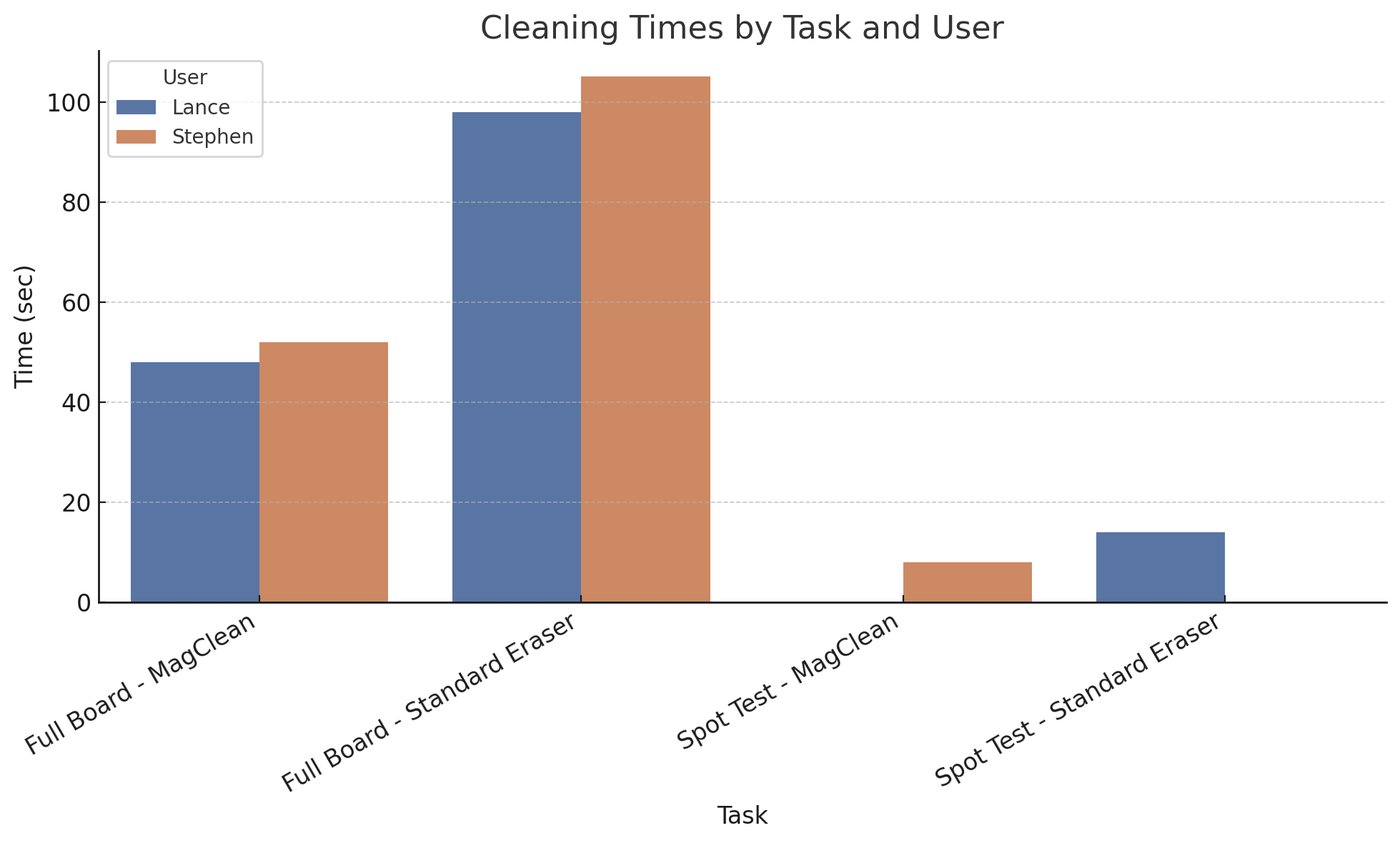
Timed runs, two testers, full-board and spot-clean tasks