
Composites Manufacturing
Mechanical Engineering Internship — Levanta Technologies · Summer 2026
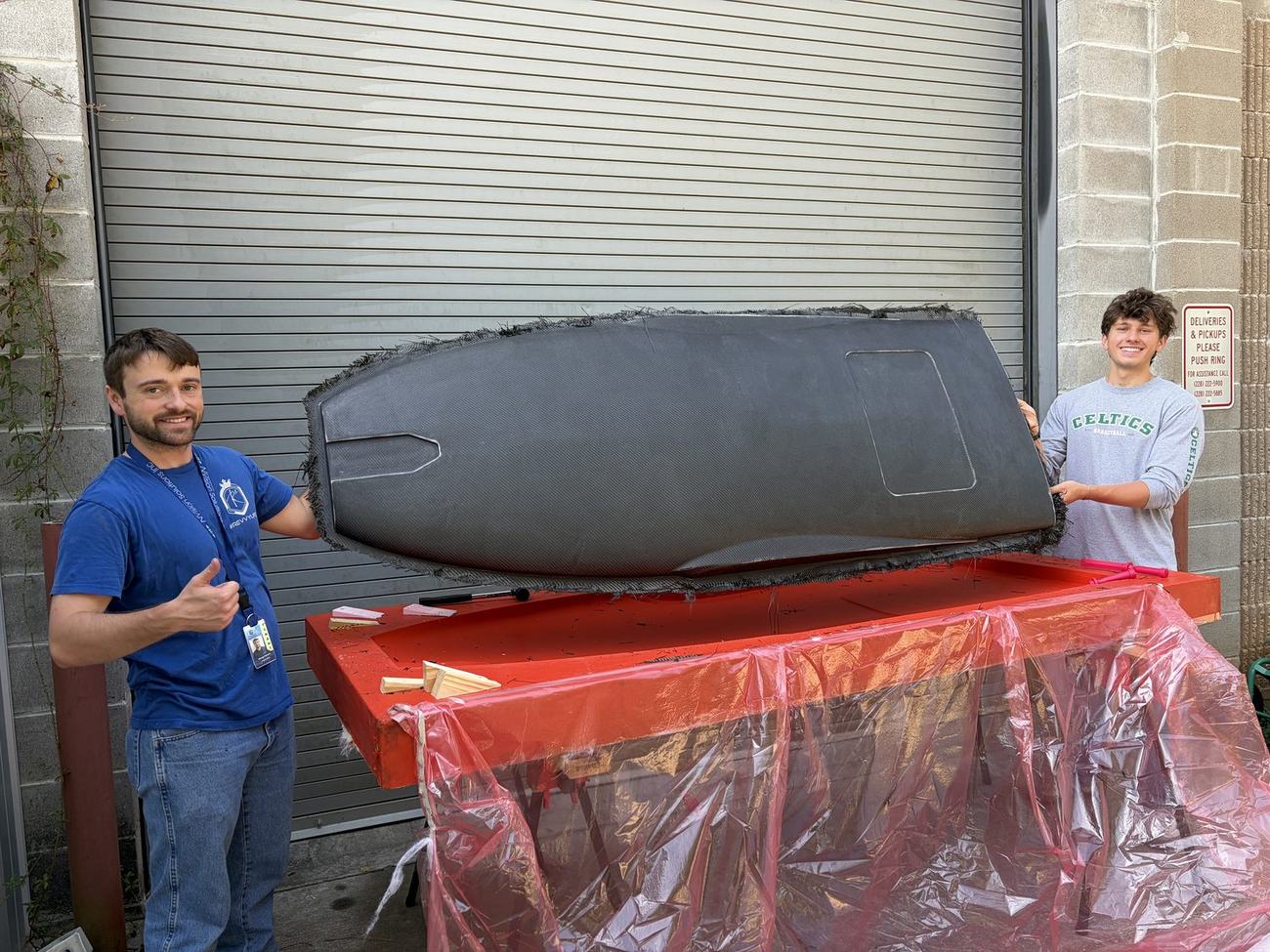
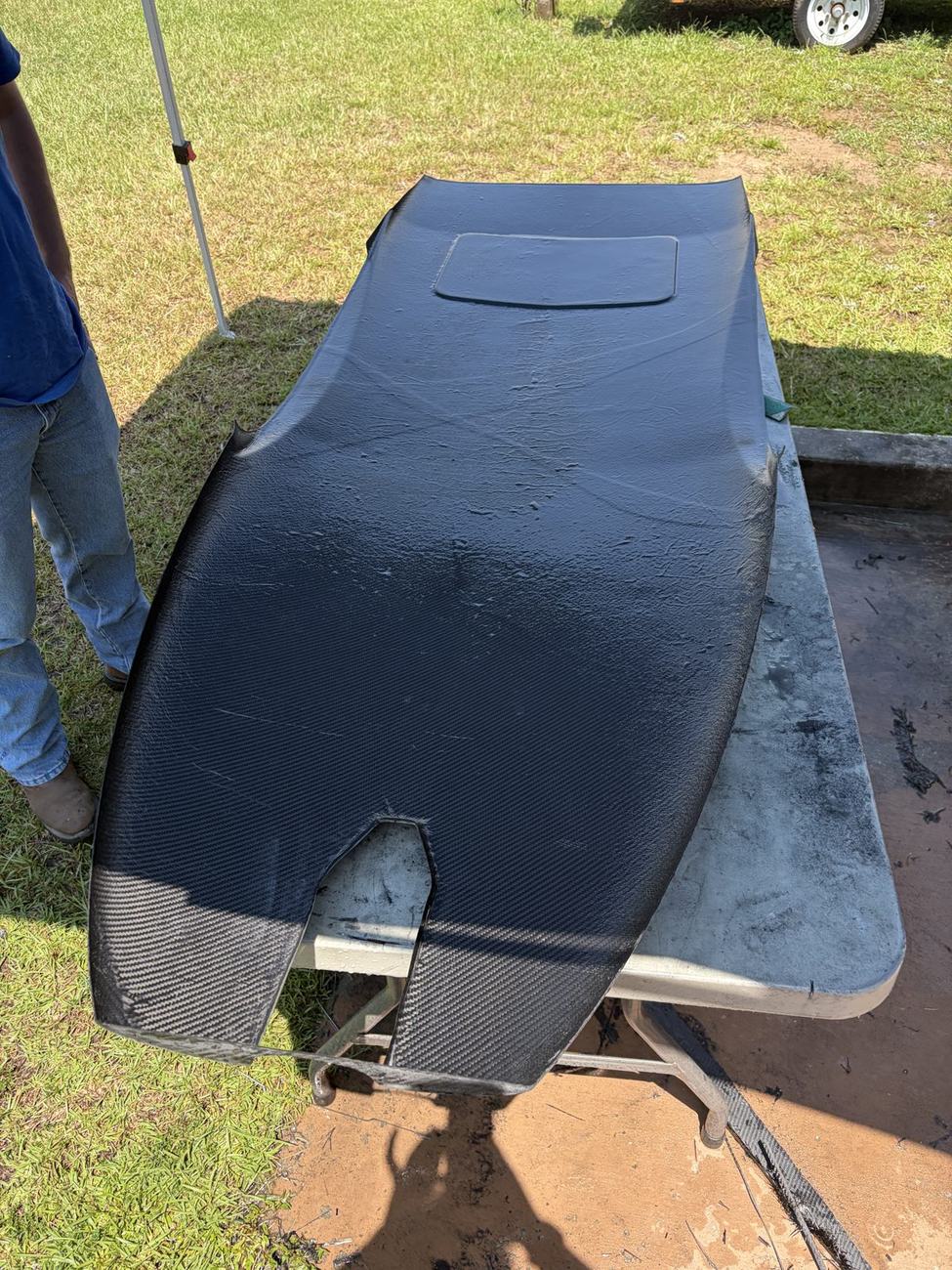
The finished full-length carbon bottom skin beside the mold it came off, and the trimmed part test-fitted to the hull the same day.
Overview
During my internship at Levanta Technologies I spent nine weeks on production composites for a maritime drone. A composite part starts two generations upstream: a plug (the positive shape, surfaced until it’s worth copying), then a mold cast over it, then the part — and I worked every stage of that chain. Over the summer I:
- Prepped and sealed foam/3D-printed plugs, prepped them for release, and faired seams
- Laid tooling gelcoat and built chopped-strand fiberglass molds in box forms
- Wet-laid carbon into the finished molds
- Vacuum-bagged parts, making pleats when necessary.
- Demolded and trimmed cured parts
- Helped take the vehicle’s full-length carbon bottom skin from a primed plug to a hull-fitted part in about eight days, reducing total craft weight by 5%
Goals & Requirements
- Build the tooling first: plug → mold → part
- Defect-free mold surfaces. Any flaw in the plug is copied into the mold and then into every part off it
- Fully consolidated laminates. No trapped air in corners, no bag film bridging concave features
- The full-length bottom skin laid up in one shot, inside a single working pot life
- Trimmed parts that fit the vehicle
Foil and strut parts
On the smaller foil and strut parts I worked the full chain. Each starts as a machined foam plug, sealed and taped for release, with a female mold built over it in a box form: tooling gelcoat first, then chopped-strand mat wetted out and rolled to chase air out of every corner and radius. Trapped air there becomes a void in the mold face, which becomes a bump on every part off that tool.
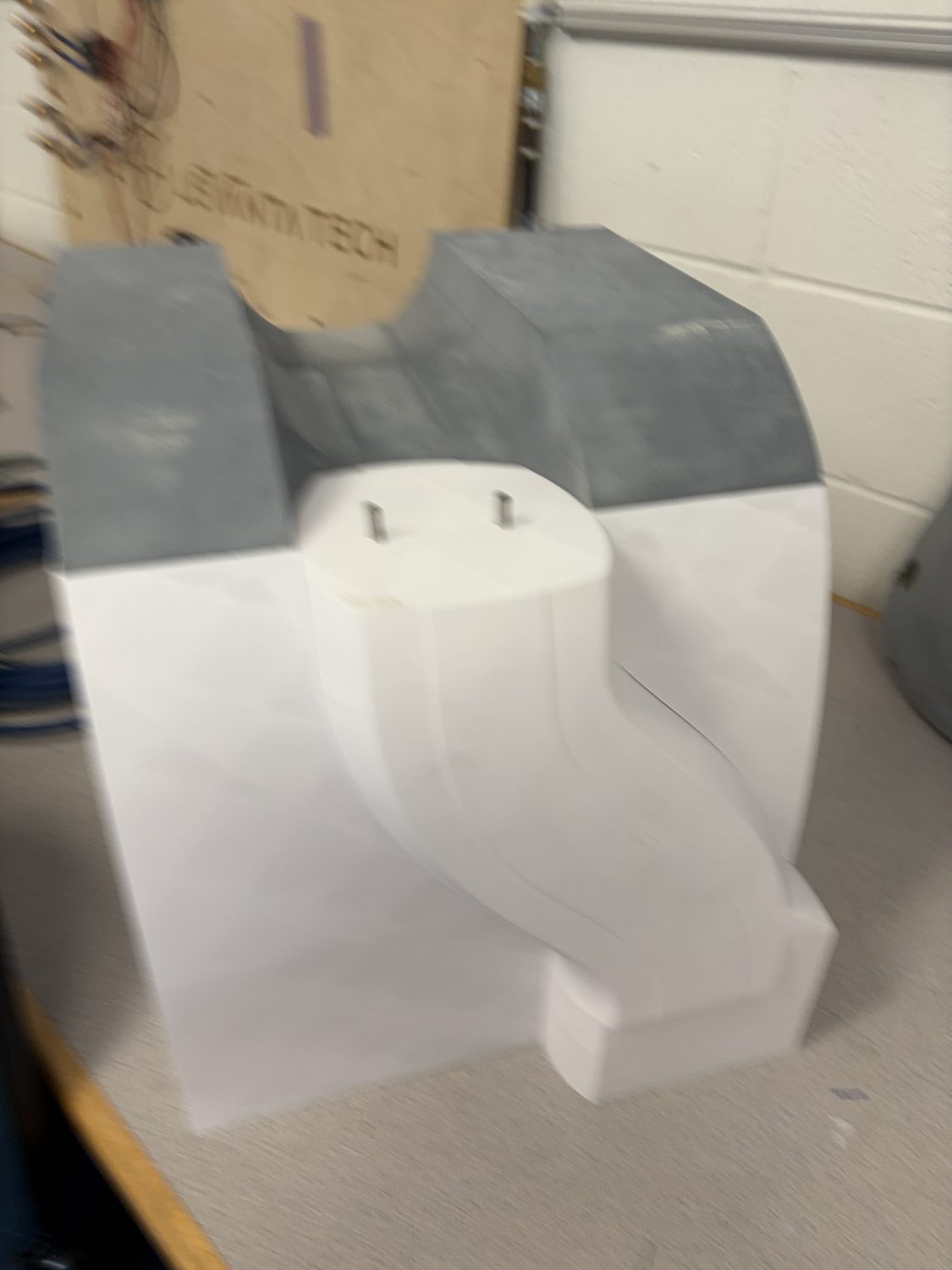
3D Printed plug
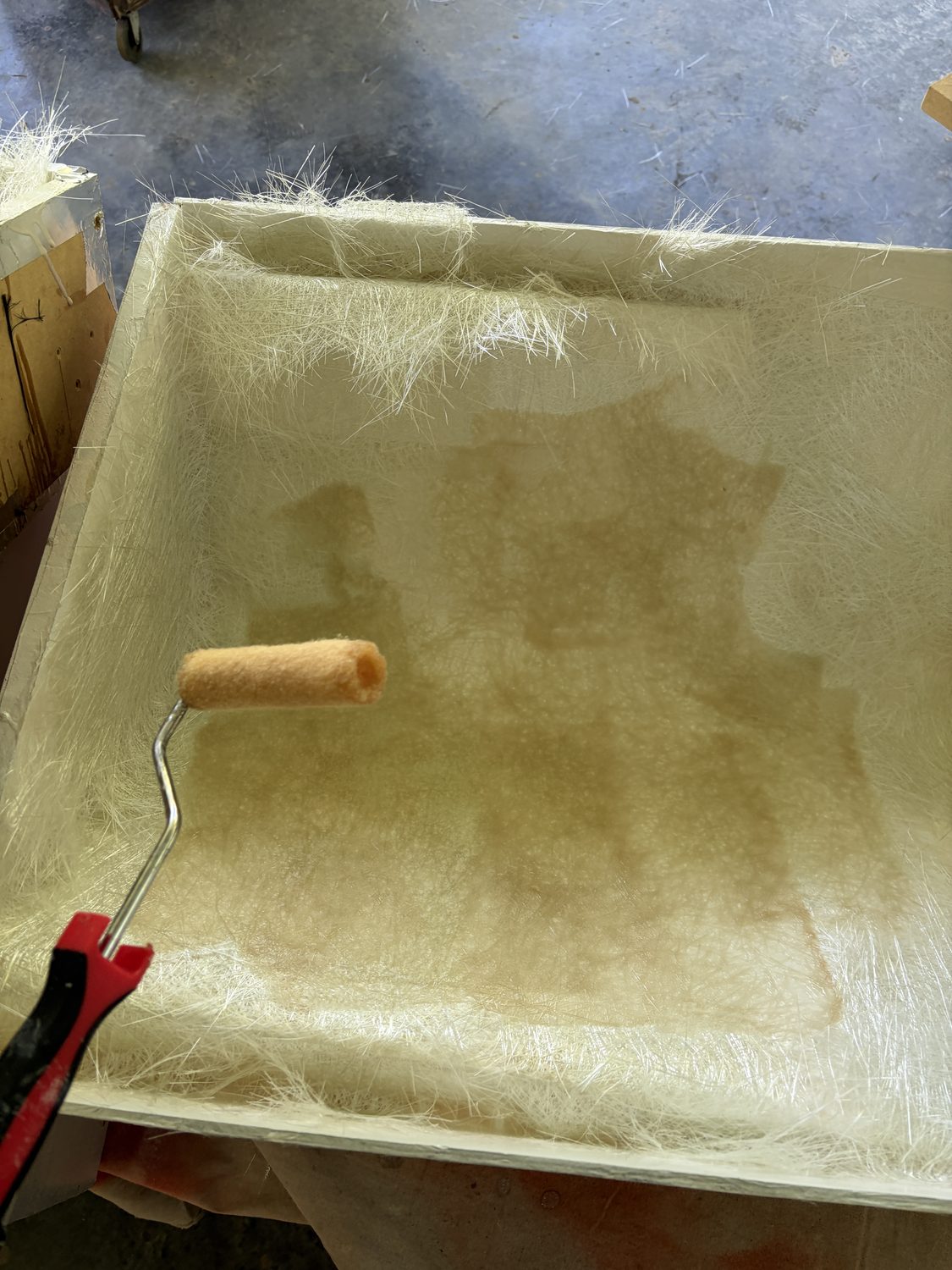
Rolling the mold laminate for consolidation
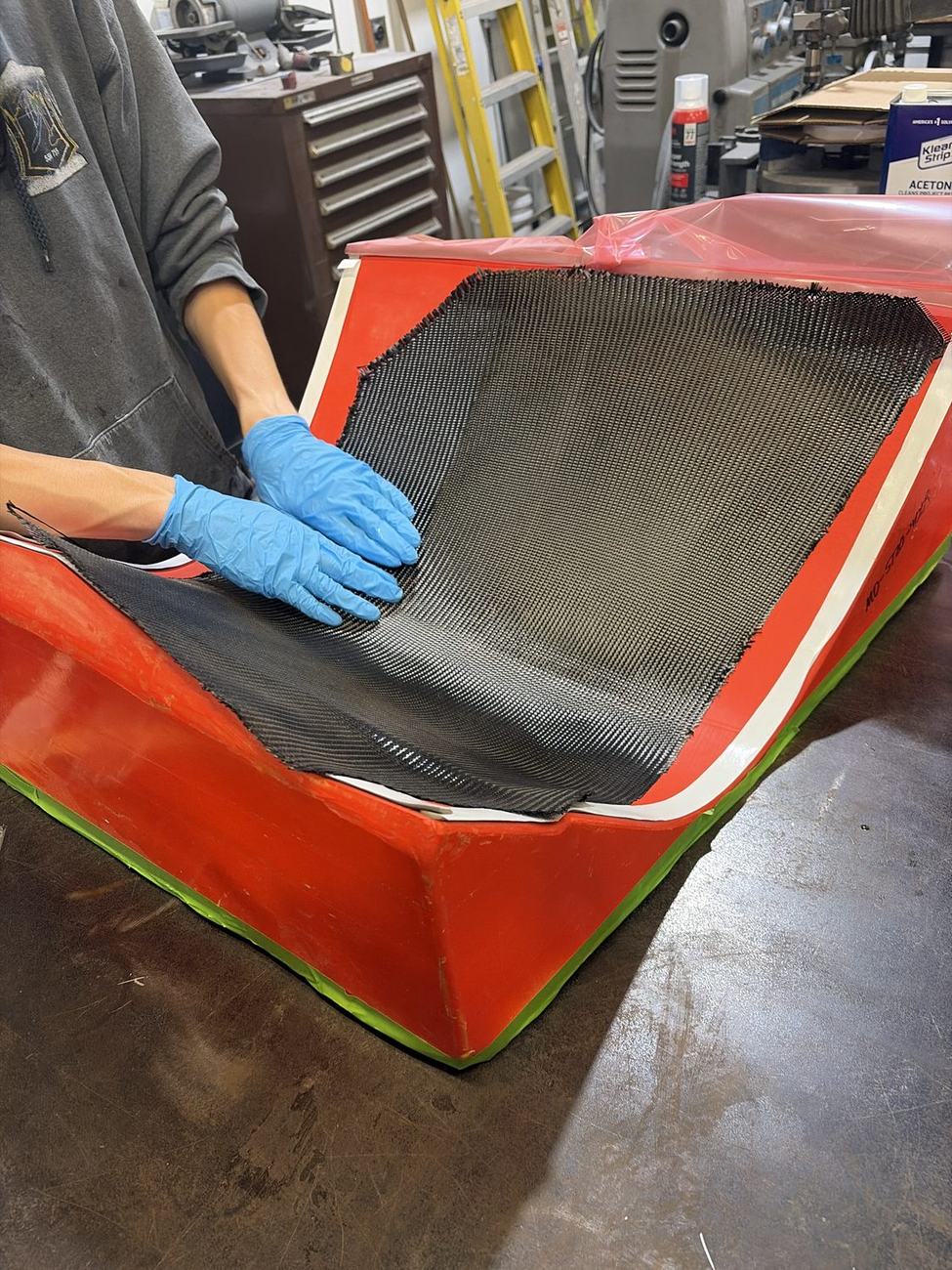
Wet-laying carbon into a female mold
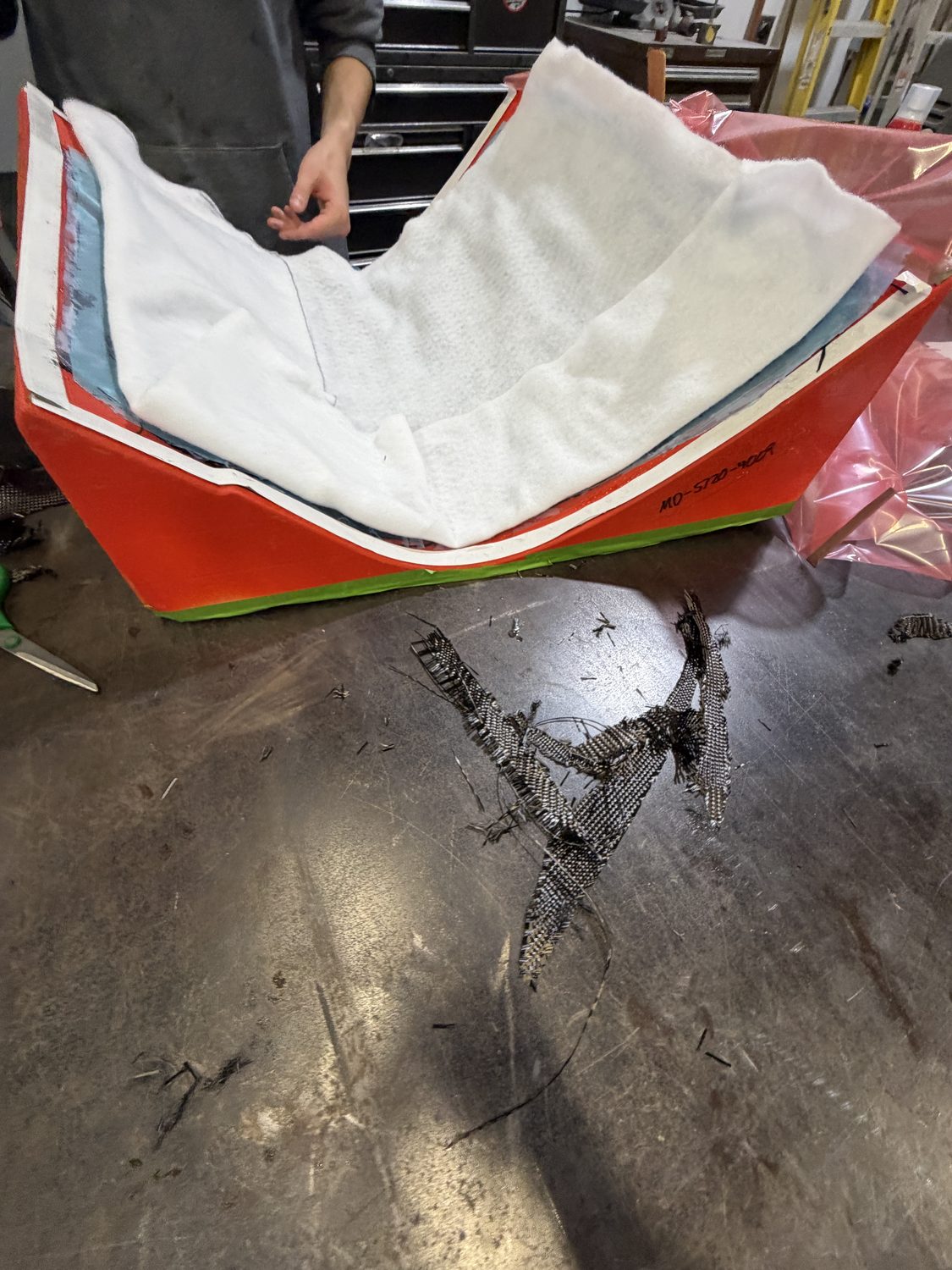
Bag preparation
I worked to ensure quality fabrication of the plugs, molds, and eventually parts.
The bottom skin
The capstone was the vehicle’s full-length carbon bottom skin. The plug was primed and faired, then a full-length fiberglass mold was laid up over it and stiffened with wooden ribs so a tool that size wouldn’t flex.
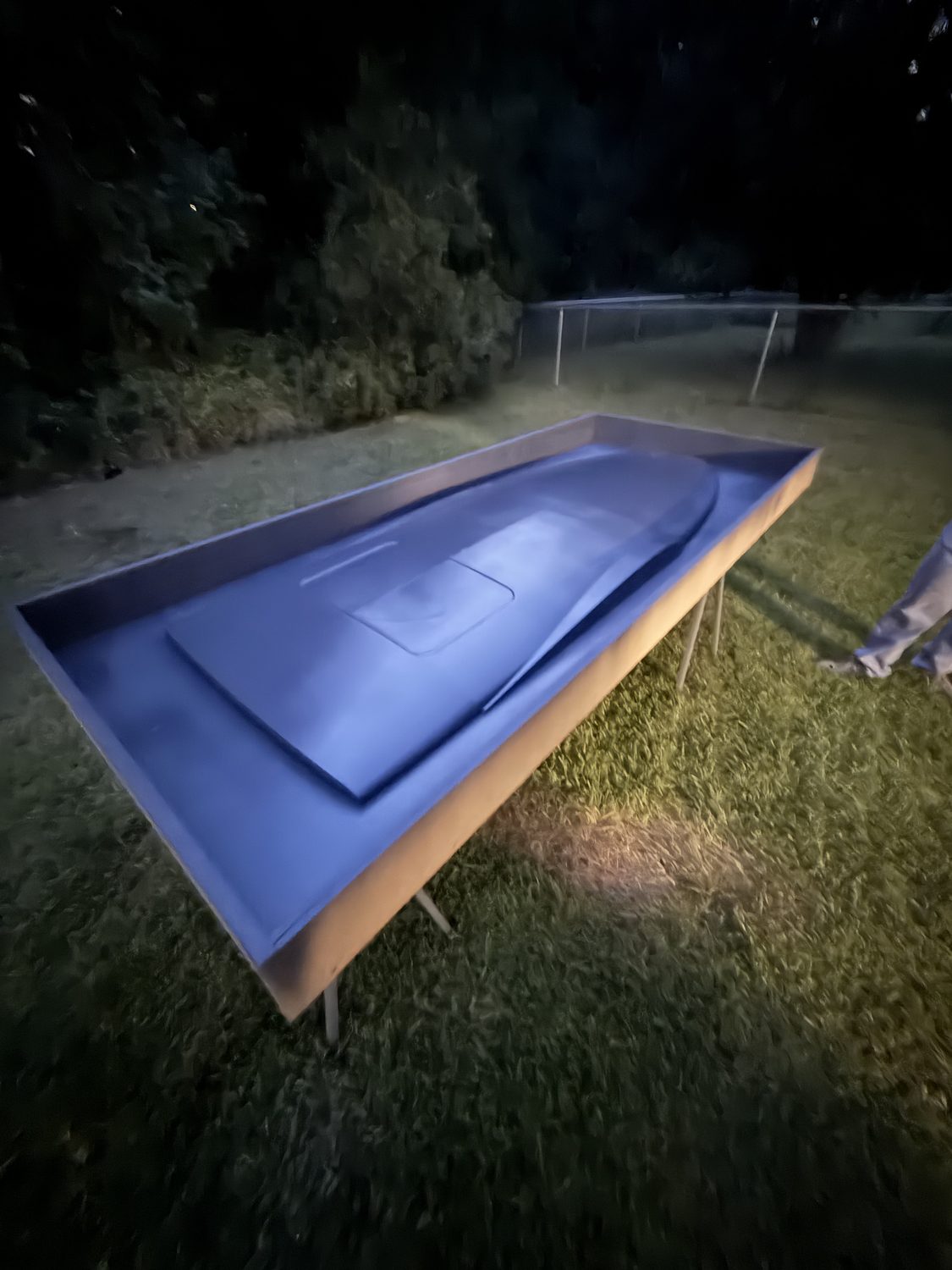
Plug primed and faired, into the night
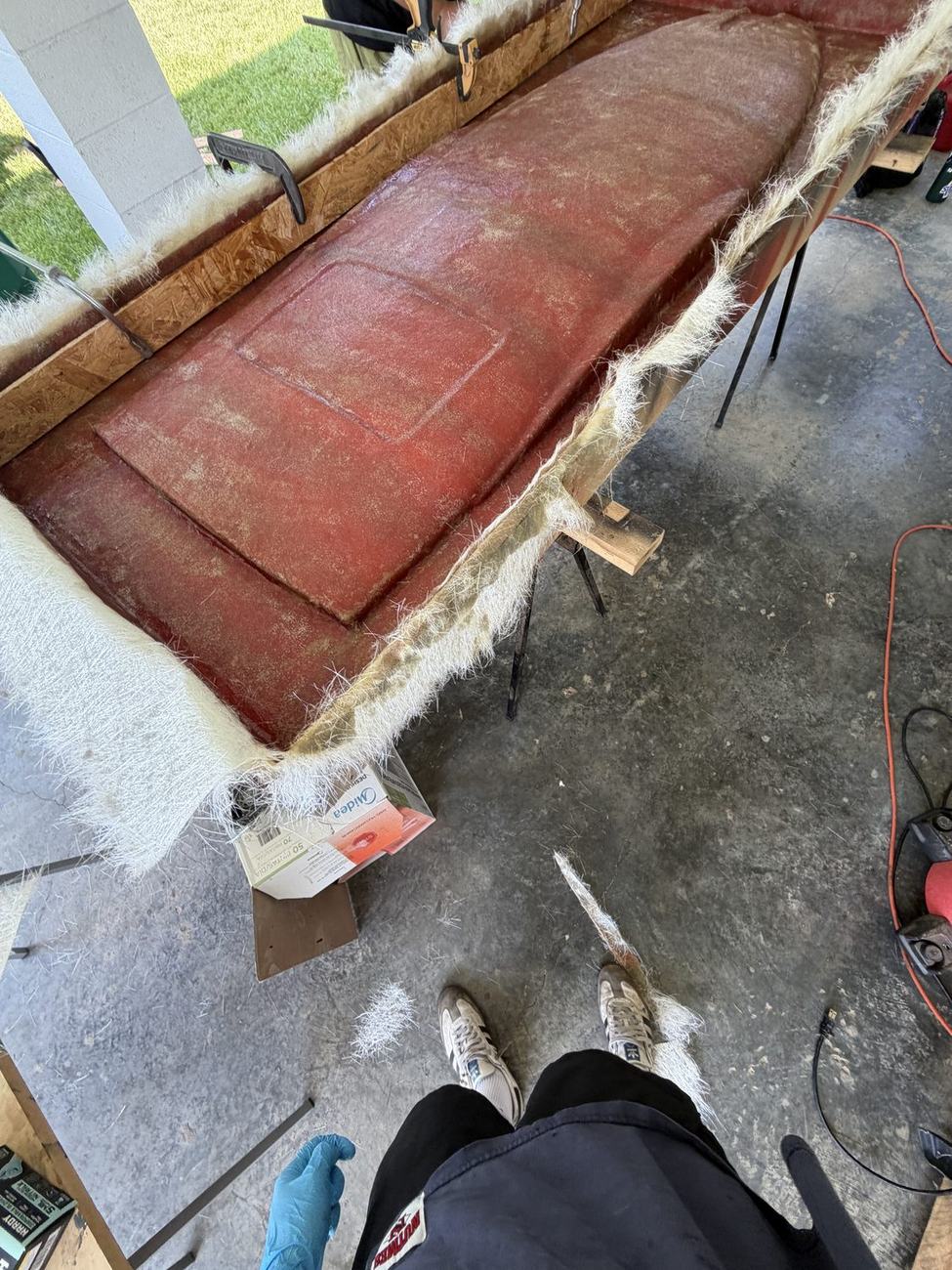
Glassing the mold over the plug
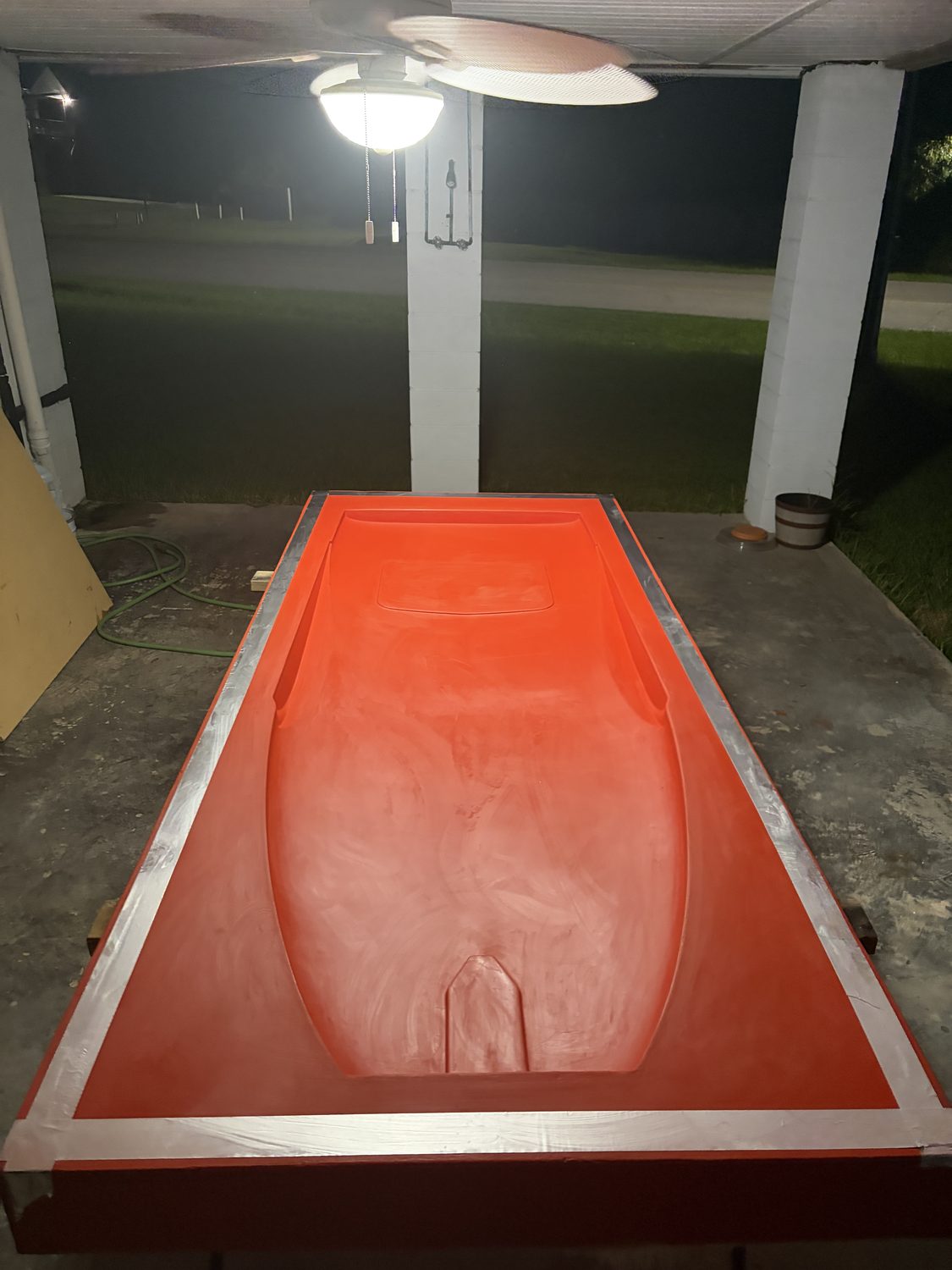
Finished mold, rib-stiffened
The skin itself went down in one shot: every carbon ply wetted out, draped, bagged, and drawn down inside a single working pot life.
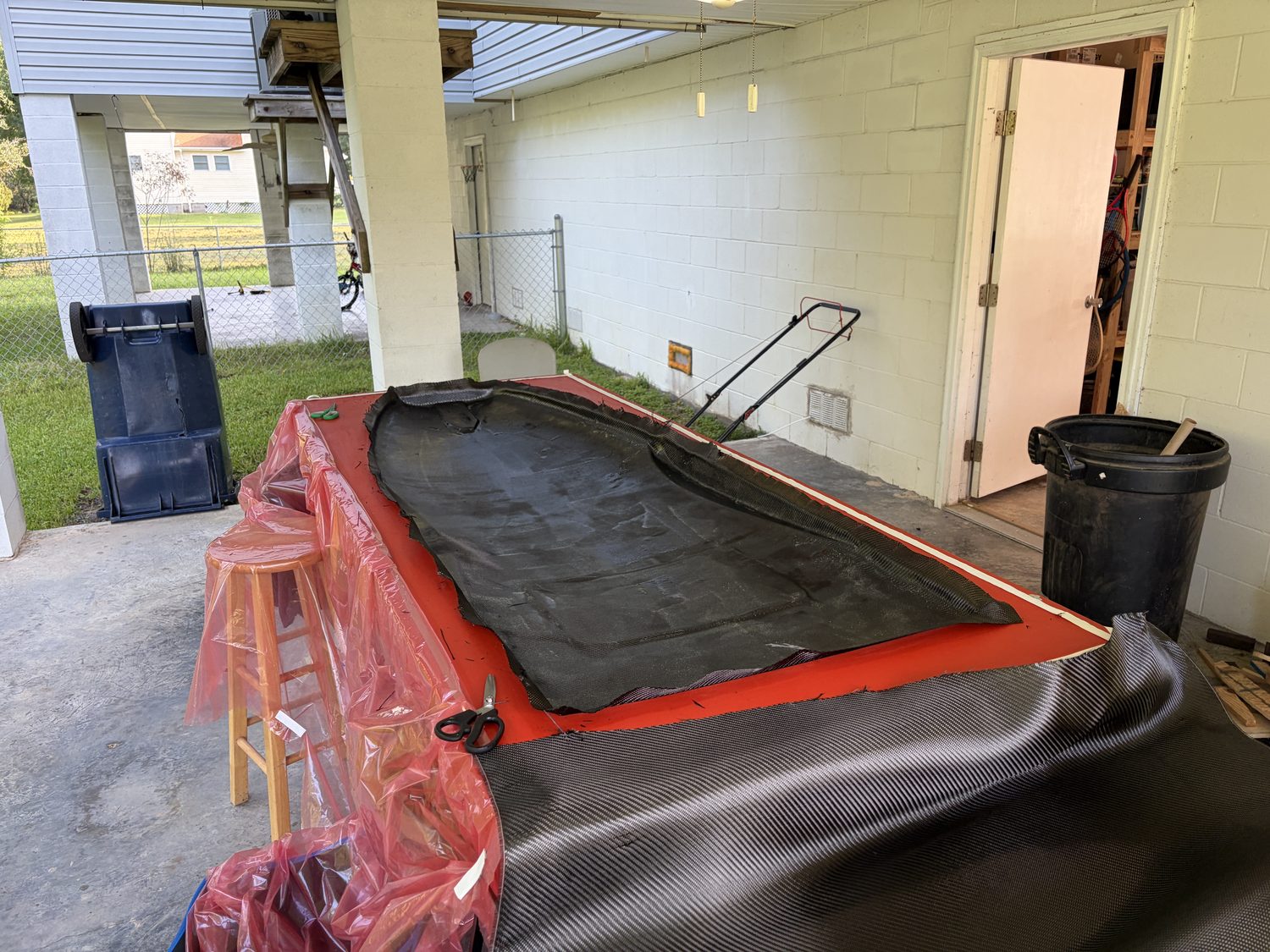
Carbon going into the mold
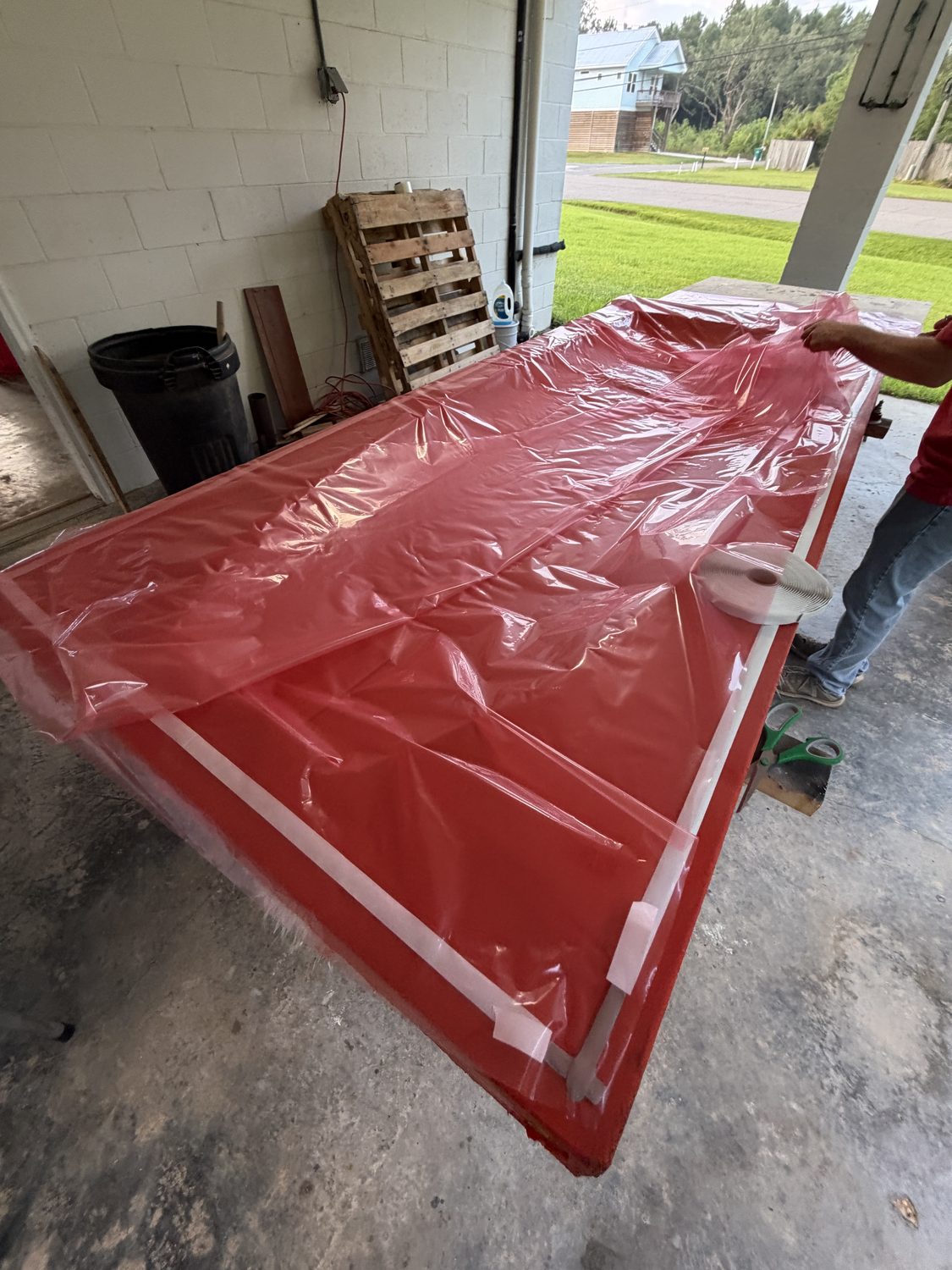
Building the bag: tape, film, pleats
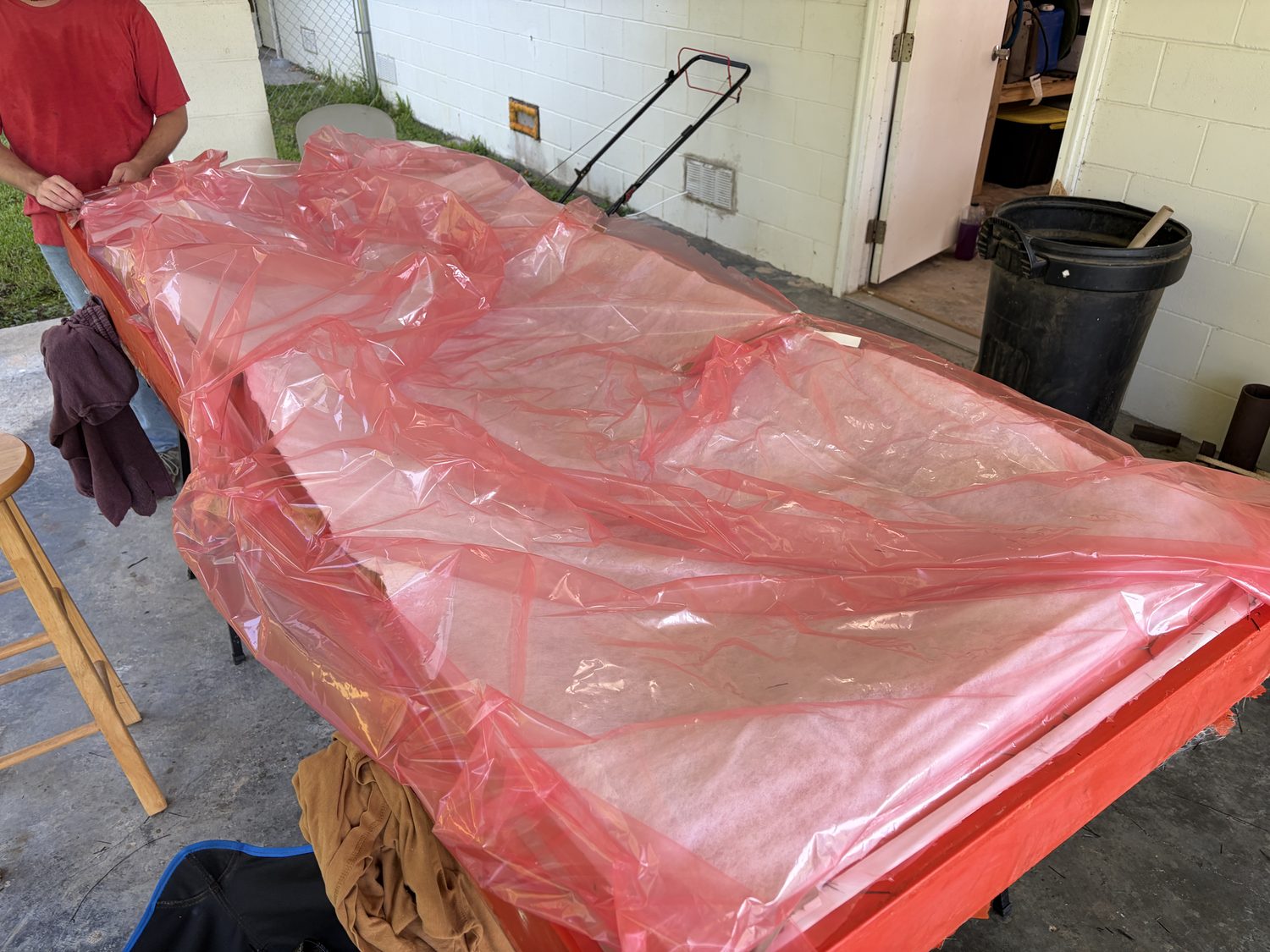
Bag laid on and drawn down
The part was demolded the next morning, trimmed to its net edge, and test-fitted to the hull the same day.
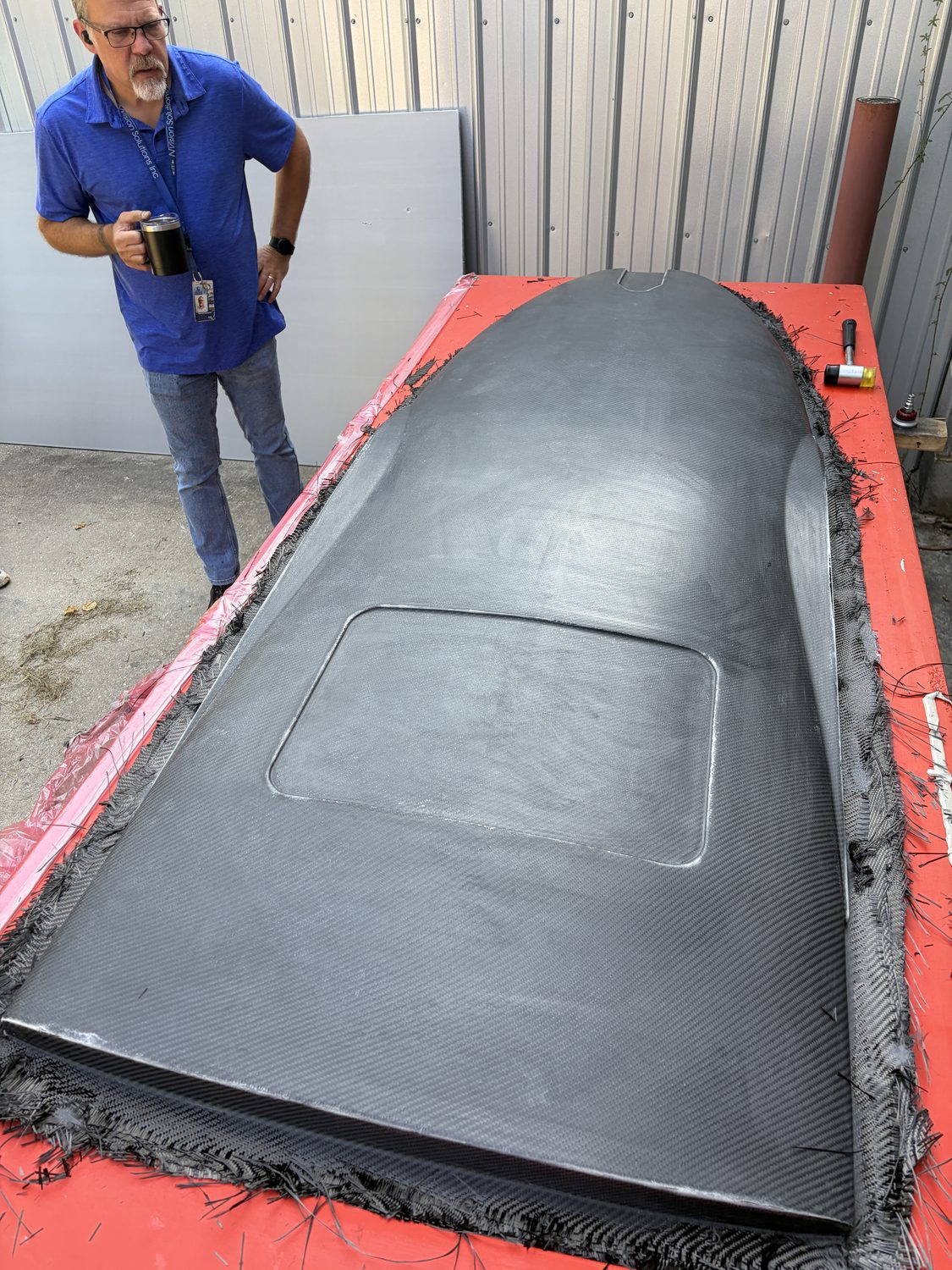
Cured skin
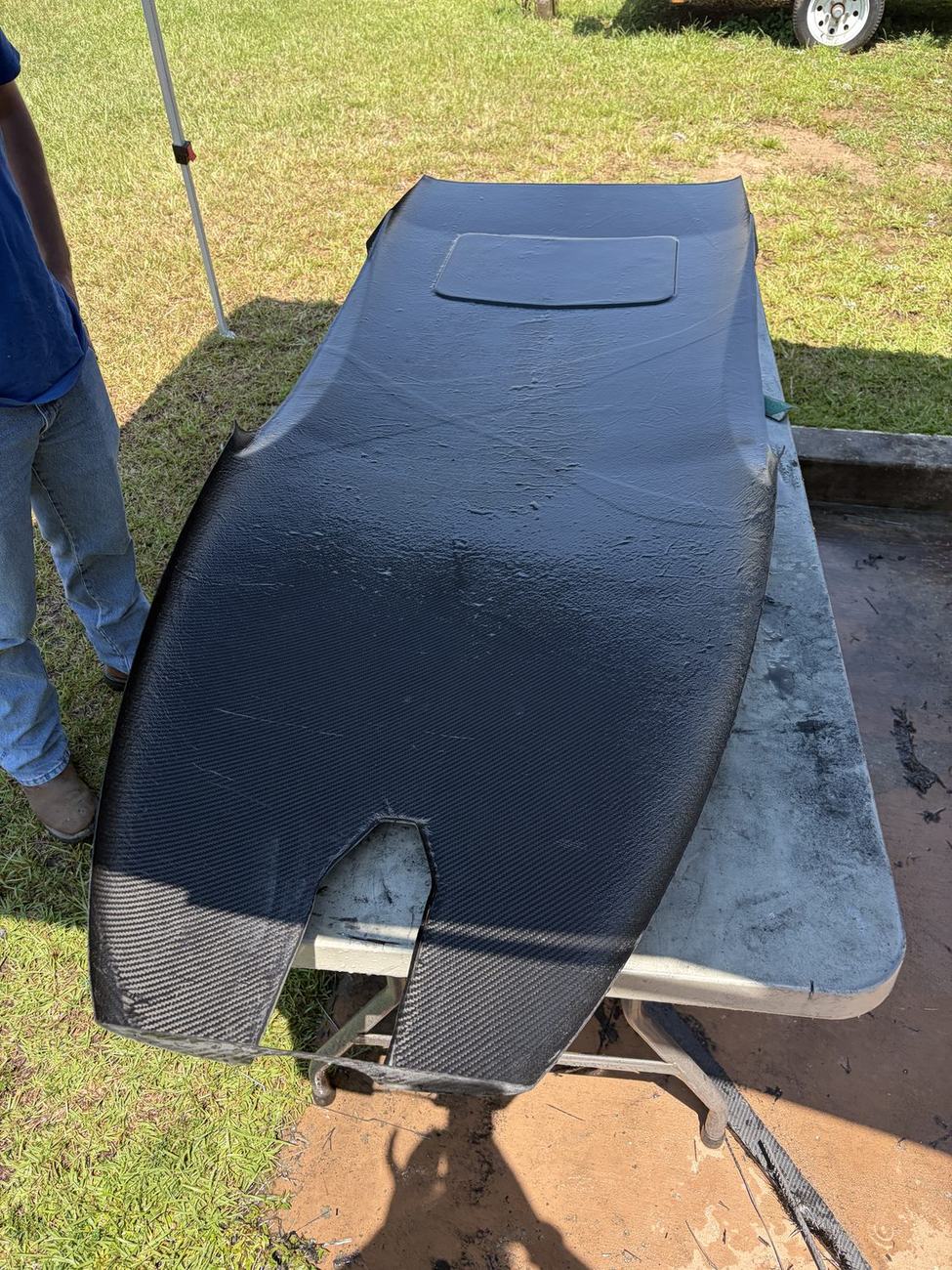
Trimmed to its net edge
Outcomes
- Nine weeks of production composites across the full plug → mold → part chain
- The full-length carbon bottom skin: primed plug to a demolded, hull-fitted part in about eight days
- Multiple foil and strut molds and parts through the complete layup–bag–demold–trim cycle
Scope note: this was hands-on process work — the layup schedules (ply counts, orientations, overlap strategy) were specified by others; I executed them.